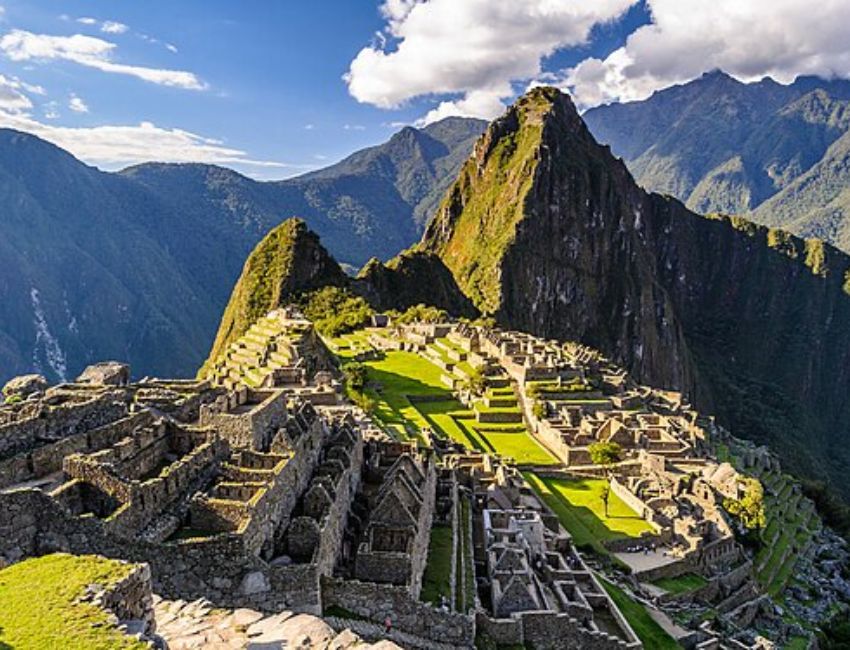
Peru and Bolivia share the Andes, Lake Titicaca and centuries of history, which makes them one of the most natural combinations in South America. In a single trip you can walk through Machu Picchu, sail on the highest navigable lake in the world and cross the white expanse of the Uyuni Salt Flats.
This guide gives you three routes of 12, 16 and 21 days, with the order that works best for altitude and transport, so you can choose the one that fits your time.
Which trip length suits you
| Length | Main stops | Pace |
|---|---|---|
| 12 days | Lima, Cusco, Machu Picchu, Titicaca, La Paz, Uyuni | Active, with a few long travel days |
| 16 days | Adds Isla del Sol and the 3-day Uyuni lagoons route | Balanced |
| 21 days | Adds Paracas, Nazca, Arequipa, Colca Canyon, Potosí and Sucre | Relaxed and complete |
The 12-day route: highlights of both countries
- Day 1: Arrive in Lima and explore Miraflores and Barranco.
- Day 2: Fly to Cusco and go straight down to the Sacred Valley, which sits lower and helps you adjust to the altitude.
- Day 3: Visit Pisac, Moray or Maras and spend the night in Ollantaytambo.
- Day 4: Take the train to Aguas Calientes, visit Machu Picchu and return to Cusco.
- Day 5: Explore Cusco, including the Qorikancha, San Blas and Sacsayhuamán.
- Day 6: Hike to Rainbow Mountain, or take a free day in Cusco.
- Day 7: Travel to Puno by tourist bus, with stops along the way.
- Day 8: Boat trip to the Uros floating islands and Taquile.
- Day 9: Cross into Bolivia, stop in Copacabana and continue to La Paz.
- Day 10: Ride the cable cars of La Paz and visit the Witches’ Market and Moon Valley.
- Day 11: Fly to Uyuni and spend the day on the salt flat, staying for sunset.
- Day 12: Fly back to La Paz for your international connection.
If you prefer a route with guides, transport and hotels already arranged, our 13 days in Peru and Bolivia follows a very similar path with one extra day to travel at a calmer pace.
The 16-day route: more time on the lake and the altiplano
- Day 1: Arrive in Lima.
- Days 2 to 3: Fly to Cusco and spend two days in the Sacred Valley.
- Day 4: Machu Picchu, returning to Cusco in the evening.
- Days 5 to 6: Cusco city and a day hike to Rainbow Mountain or Humantay Lake.
- Day 7: Travel to Puno.
- Day 8: Uros and Taquile.
- Day 9: Cross to Copacabana and take a boat to Isla del Sol, where you spend the night.
- Day 10: Walk the island’s Inca paths and continue to La Paz.
- Day 11: La Paz city tour.
- Day 12: Fly to Uyuni.
- Days 13 to 15: Three-day tour of the salt flat, colored lagoons, geysers and desert landscapes of southern Bolivia.
- Day 16: Fly back to La Paz for your departure.
The three-day Uyuni route is the highlight of this version. Our Uyuni guide explains what each day of that tour includes.
The 21-day route: southern Peru to colonial Bolivia
- Day 1: Arrive in Lima.
- Day 2: Travel to Paracas and take a boat to the Ballestas Islands.
- Day 3: Visit the Huacachina oasis, continue to Nazca for an optional flight over the lines and take an overnight bus to Arequipa.
- Day 4: Explore Arequipa and the Santa Catalina Monastery.
- Days 5 to 6: Colca Canyon, with the condor viewpoint at Cruz del Cóndor.
- Day 7: Fly from Arequipa to Cusco.
- Days 8 to 12: Cusco, the Sacred Valley, Machu Picchu and Rainbow Mountain.
- Days 13 to 14: Travel to Puno and visit the lake islands.
- Day 15: Copacabana and Isla del Sol.
- Day 16: Continue to La Paz and explore the city.
- Day 17: Fly to Uyuni.
- Days 18 to 19: Salt flat and lagoons tour.
- Day 20: Travel to Potosí and visit the historic center and the Cerro Rico mines.
- Day 21: Continue to Sucre, Bolivia’s white colonial city, and fly out for your connection.
The first half of this route matches the stops in our tour of southern Peru in 12 days, which you can later extend into Bolivia.
Choosing the direction of your route
Starting in Peru and ending in Bolivia is the easiest option for most travelers. Lima has more international flights, and moving from lower to higher places helps your body adjust: the Sacred Valley first, then Cusco, then the lake and La Paz.
Starting in La Paz makes sense only if you find a better flight there. In that case, stay a couple of days in the city before heading to Uyuni, since La Paz sits at around 3,600 m a.s.l.
Moving between Peru and Bolivia
Most travelers cross the border by road between Puno and Copacabana, a route explained in detail in our Lake Titicaca travel guide. Within each country, these are the key connections:
- Lima to Cusco: about 1 hour 20 minutes by plane
- Cusco to Puno: a full day by tourist bus, or a scenic train journey
- La Paz to Uyuni: a short flight or an overnight bus of around 10 hours
- Uyuni to Potosí and Sucre: about 4 hours to Potosí, then around 3 more to Sucre by road
Entry requirements for Bolivia depend on your nationality, so check them well before your trip.
Acclimatizing along the way
Almost the whole route is above 2,500 m a.s.l., with Uyuni and parts of the lagoons tour above 4,000 m a.s.l. These habits make a big difference:
- Keep the first day after each flight to higher ground light.
- Drink water often and try coca tea, a local remedy for altitude.
- Leave demanding hikes like Rainbow Mountain for the second half of your time in Cusco.
- In the 21-day route, Arequipa, at around 2,300 m a.s.l., works as a natural first step before Colca and Cusco.
Seasons that shape the route
From May to October, the dry season brings clear skies at Machu Picchu, open trails and the best conditions for the Uyuni lagoons tour, although nights are very cold. From January to March, rain covers the salt flat with a thin layer of water that creates the famous mirror effect, but some routes to the lagoons can close and trails around Cusco are muddier.
What to book first
- Machu Picchu tickets and trains: they sell out weeks or months ahead in high season.
- Domestic flights: especially Lima to Cusco and La Paz to Uyuni.
- Uyuni tour: choose an operator with good safety standards and experienced drivers.
- Isla del Sol lodging: check which parts of the island are open before you book.
Planning questions for Peru and Bolivia
Can you add the Inca Trail to these itineraries?
Yes. The classic 4-day trek replaces the train to Machu Picchu, so add two or three days to any route. Permits sell out months in advance, and the trail closes every February for maintenance.
Can you end the trip in Chile?
Yes. The three-day Uyuni tour can finish in San Pedro de Atacama instead of returning to Uyuni. From there, you fly home from Calama or continue through Chile.
How much walking is involved?
Most days include moderate walking at archaeological sites and in cities. Rainbow Mountain, Humantay Lake and Isla del Sol are the most demanding hikes, and all of them are optional.
Which currency do you need?
Peruvian soles in Peru and bolivianos in Bolivia. Carry some cash in both, since cards are not accepted everywhere, especially near the border and in Uyuni.
Build your Peru and Bolivia journey with MVP Experiences
Whether you have 12, 16 or 21 days, Peru and Bolivia reward travelers who plan the route with care. MVP Experiences can arrange your flights, trains, border crossing and local guides, so you move from Machu Picchu to the salt flats without worrying about the details.