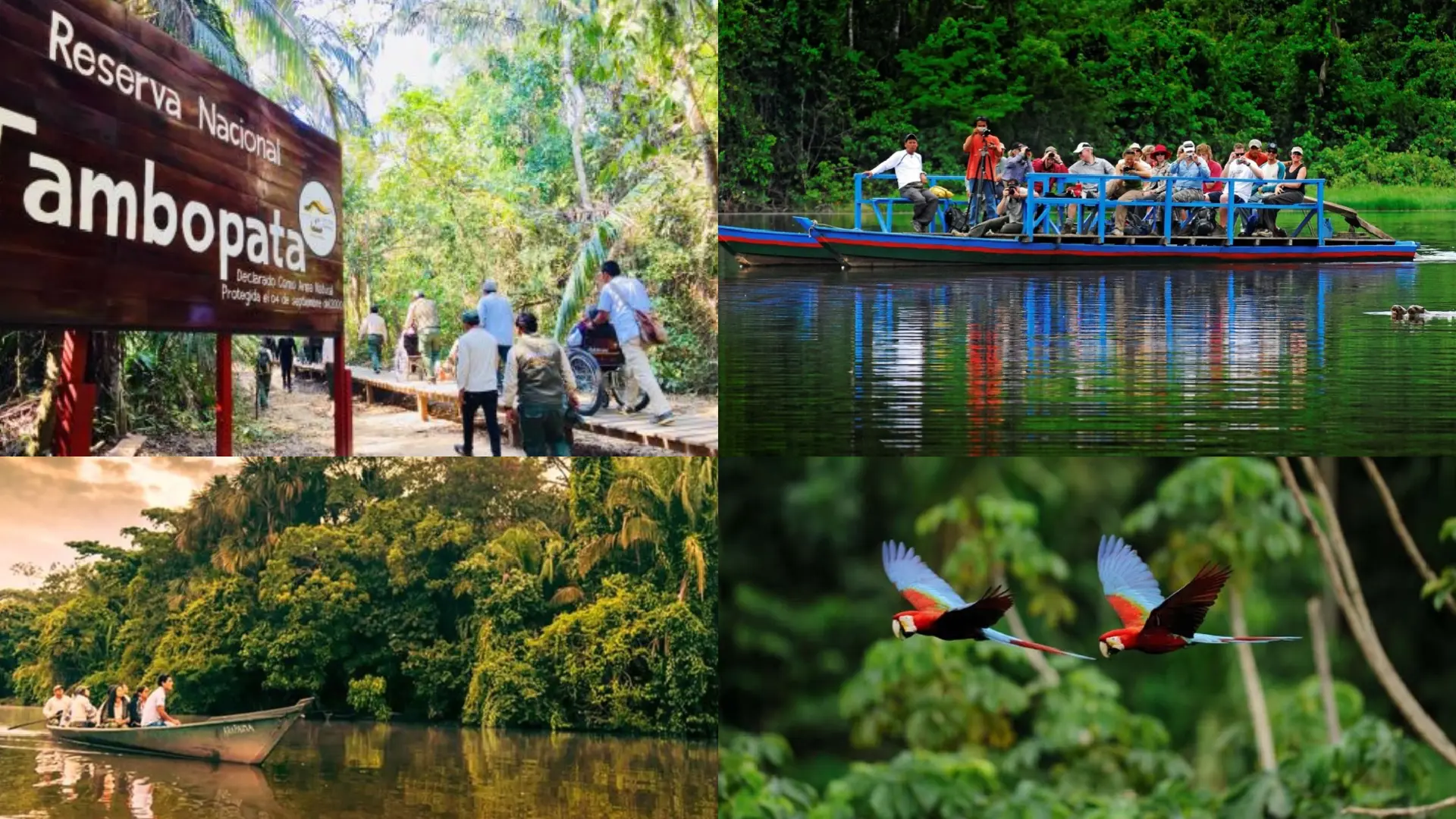
The Peruvian Amazon is closer than most travelers think. A short flight from Cusco takes you from stone streets at 3,400 m a.s.l. to a warm, green rainforest at around 200 m a.s.l., where macaws, monkeys and giant otters live along the rivers. Tambopata, reached through the town of Puerto Maldonado, is the most accessible part of the Peruvian jungle and a natural addition to a trip centered on Machu Picchu. This guide explains how to get there, what life in a lodge looks like and how to prepare.
Why Tambopata Is the Easiest Amazon Access from Cusco
Tambopata sits in the Madre de Dios region, in southeastern Peru. The Tambopata National Reserve and the neighboring Bahuaja-Sonene National Park protect a large area of lowland rainforest, rivers and oxbow lakes with a very high concentration of birds, mammals and plants.
Tambopata vs Manu vs Iquitos
Peru has three main entry points to the Amazon. Tambopata is the most practical if you are already in Cusco, since the flight takes under an hour and lodges are a short boat ride from town. Manu is more remote and pristine, but reaching it usually means a long road trip over the Andes and at least five days. Iquitos, in the north, sits on the Amazon River itself and is only reached by air from Lima, which makes it harder to combine with Cusco. For most travelers with limited time, Tambopata offers the best balance.
Arriving in Puerto Maldonado
Flights from Cusco and Lima
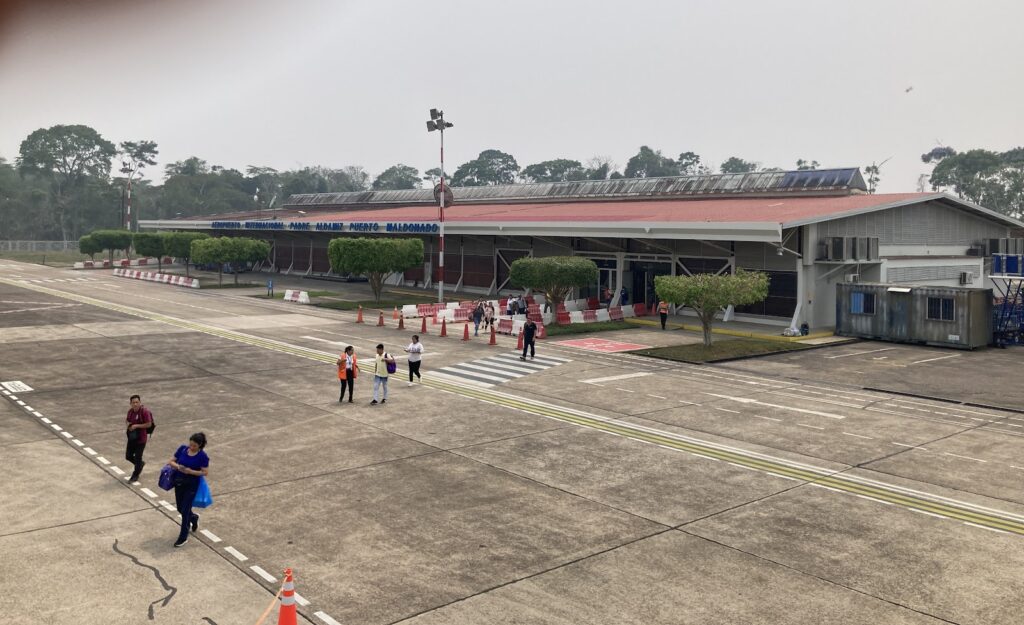
Direct flights from Cusco to Puerto Maldonado take around 50 minutes, and flights from Lima take about an hour and a half. Lodge staff usually meet you at the airport, so you do not need to organize transport in town.
The boat ride to your lodge
After a short drive to the port, you board a covered motorboat along the Tambopata or Madre de Dios River. Depending on the lodge, the ride lasts from 30 minutes to more than 3 hours. Lodges farther upstream have more wildlife but require more travel time. Boats have limited space, so most lodges ask you to leave large suitcases in their office in town and bring only a small bag.
Life in a Jungle Lodge
Rooms, electricity and Wi-Fi
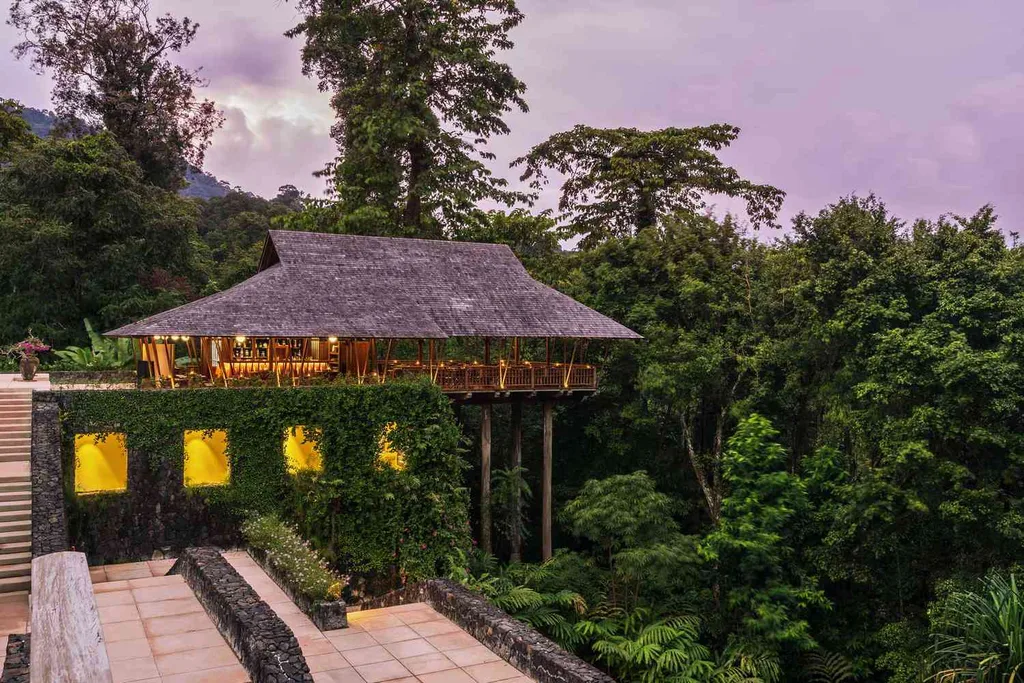
Most lodges have wooden bungalows with mosquito nets, private bathrooms and walls partly open to the forest. Electricity often runs only for a few hours a day, and Wi-Fi is limited or available only in common areas. Many travelers find that disconnecting is part of the appeal.
Meals and daily rhythm
Meals are usually included and served buffet-style, with fish from the rivers, rice, plantains and tropical fruits. Days start early, often before 5:00 a.m., because animals are most active at dawn. Midday is for resting during the heat, and activities resume in the afternoon and after dark.
Wildlife Experiences Worth Waking Up For
Lake Sandoval and giant otters
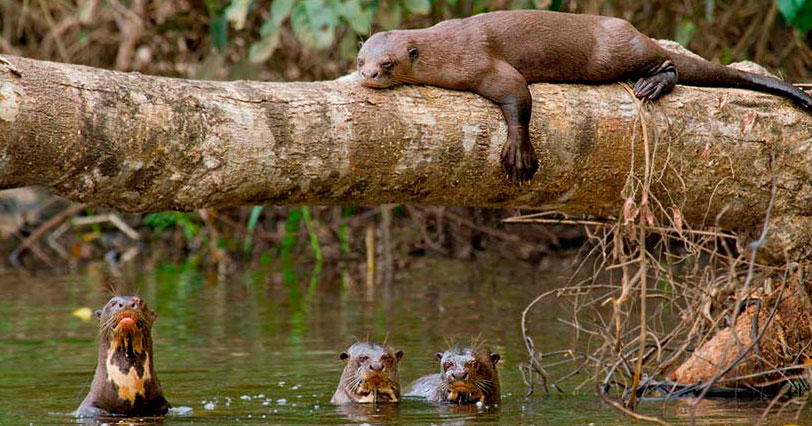
Lake Sandoval is one of the most visited spots near Puerto Maldonado. You walk along a forest trail and then paddle a canoe across the lake, looking for giant otters, hoatzins, turtles and caimans. The otters are a protected species and are seen most often in the early morning.
Macaw clay licks at dawn
Clay licks are riverbanks where macaws and parrots gather to eat clay, which provides minerals missing from their diet. Watching dozens of red, blue and green birds arrive at sunrise is one of the most memorable sights in Tambopata. The largest clay licks are deep inside the reserve, so they are usually part of longer programs.
Canopy towers and suspension bridges
Some lodges have towers or bridges that rise above the treetops. From there you can see toucans, monkeys and birds that rarely come down to the ground. The best moments are right after sunrise and before sunset.
Night walks and caiman spotting
After dark, guides lead walks with flashlights to find tarantulas, frogs, insects and sleeping birds. Night boat rides focus on caimans, whose eyes reflect the light along the riverbanks.
Guides and how to respect the animals
Local naturalist guides spot animals most visitors would miss and explain their behavior. Follow their instructions, keep your voice low, never feed wildlife and avoid using flash when photographing animals at close range.
Three or Four Days: Choosing Your Lodge Program
A three-day, two-night program covers Lake Sandoval, a night walk and a canopy visit, which is enough for a first taste of the rainforest. Four or five days let you reach a major clay lick, see more species and enjoy the forest at a slower pace. Longer stays make sense for birdwatchers and photographers.
Rain, Heat and Cold Fronts in the Rainforest
Temperatures usually range between 25 and 35°C with high humidity. The drier months, from about April to October, bring lower river levels and easier trails. From November to March, rain is frequent and often heavy, but the forest is at its greenest. Between May and August, cold air from the south occasionally reaches the region, and for a few days temperatures can drop to around 10°C, so bring a warm layer even for the jungle.
Health Precautions Before You Travel
Check with a travel doctor at least a month before your trip. Yellow fever vaccination is generally recommended for travelers visiting the Peruvian Amazon, and your doctor can tell you whether malaria medication is advised for your itinerary. Use insect repellent with DEET or picaridin, especially at dawn and dusk, and drink only bottled or treated water.
Clothing and Gear for the Humid Forest
Lightweight long sleeves and long pants protect you from insects and sun better than shorts. Choose quick-drying fabrics in neutral colors, as bright colors attract insects. Bring a rain poncho, a headlamp, binoculars and a dry bag for your camera. Most lodges lend rubber boots for muddy trails. You can adapt these items to the rest of your trip with our South America packing list.
Pairing the Jungle with Cusco and Machu Picchu
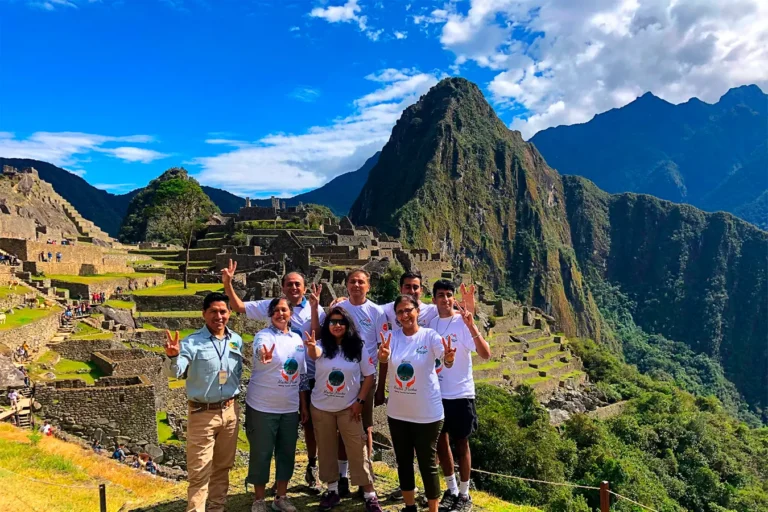
Many travelers go to the jungle after Cusco and Machu Picchu, since the low altitude feels like a rest after days in the Andes. Others place it between Lima and Cusco. Both work, as long as you take the flight from Cusco or Lima rather than traveling overland. If you want both regions planned in one trip, our Peru tour with the Amazon combines Lima, Cusco, Machu Picchu and the rainforest in 13 days.
Frequently Asked Questions
Will I definitely see jaguars in Tambopata?
Jaguars live in the reserve, but sightings are rare and mostly a matter of luck. Monkeys, macaws, caimans and capybaras are much more likely.
Can I use my phone in the rainforest?
Signal is weak or absent at most lodges. Some offer limited Wi-Fi in common areas, so let family know you may be offline for a few days.
Is the Peruvian Amazon suitable for children?
Yes. Many lodges welcome families and adapt activities for kids. Check with your doctor about vaccination requirements for children before you travel.
How much luggage can I take to the lodge?
Most lodges limit you to a small bag of about 10 kg because of space on the boats. Larger luggage is stored in Puerto Maldonado until you return.
Is Tambopata very different from the Ecuadorian Amazon?
Both share similar wildlife, but access differs. Tambopata is best for travelers combining the jungle with Cusco, while the Ecuadorian Amazon fits trips based in Quito.
Are the lodges eco-friendly?
Many use solar energy, employ local staff and support conservation projects. Ask about their sustainability practices before you book.