Buenos Aires does not keep tango inside one theater. You might see a couple dancing in a San Telmo square in the afternoon, watch professional dancers perform on stage after dinner, or spend the night beside a crowded dance floor where porteños keep dancing long after midnight.
These are three very different ways to experience tango.
Understanding the difference between a tango show, a milonga and a tango class will help you choose the experience that actually matches your trip.
At MVP Experiences, we usually explain it this way: choose a tango show if you want to watch a polished performance, a milonga if you want to see the social dance as locals experience it, and a class if you want to try tango yourself.
Schedules, prices and milonga nights change throughout the year, so always check with the venue before crossing the city.
Tango show, milonga or class: what is the difference?
Before deciding where to see tango in Buenos Aires, it helps to understand what each type of experience involves.
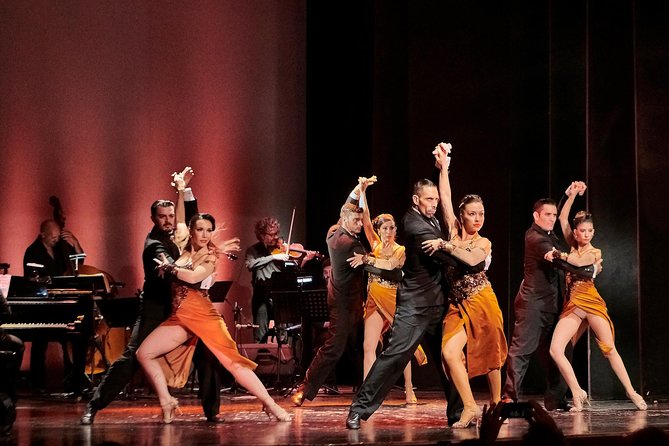
Tango shows: the performance
A tango show is the easiest introduction for a first-time visitor.
You sit at a table while professional dancers, musicians and singers perform a choreographed production. Many tango houses offer two options: show only or dinner and show.
Dinner usually begins earlier in the evening, followed by the performance.
The advantage is simple: everything is organized for you. You reserve your seat, arrive at a fixed time and watch the show.
The trade-off is that this is tango as a performance rather than tango as a social dance.
Milongas: where Buenos Aires actually dances
A milonga is completely different.
The word can refer both to a style of tango music and to the social gathering where people go to dance tango.
There may be an exhibition by professional dancers or occasionally a live orchestra, but the main attraction is the dance floor itself.
People come to dance with each other, sit around the room between songs, meet friends and stay for several hours.
Visitors are welcome in many milongas, even if they only want to watch.
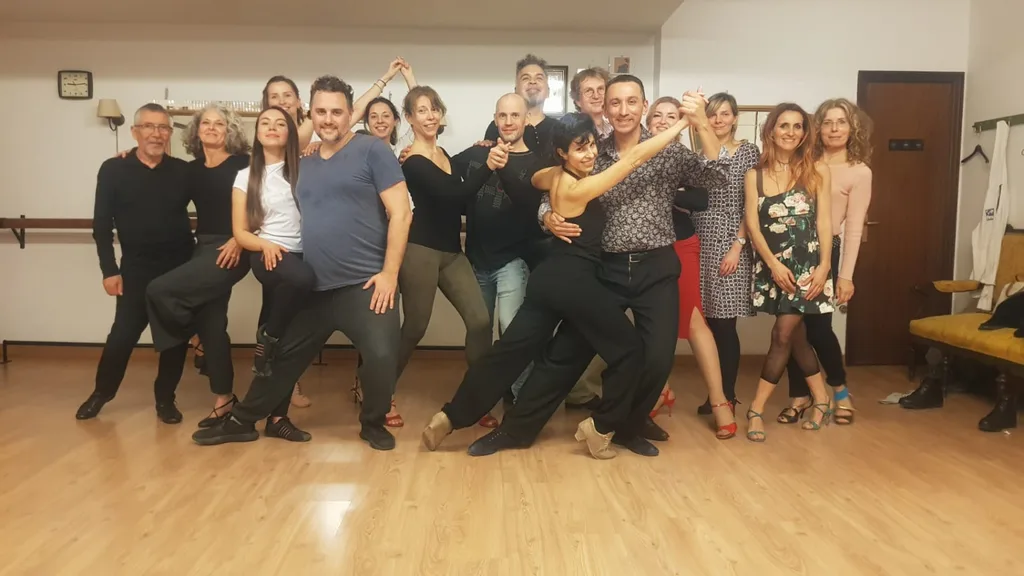
Tango classes: the easiest way onto the floor
A class sits somewhere between the two.
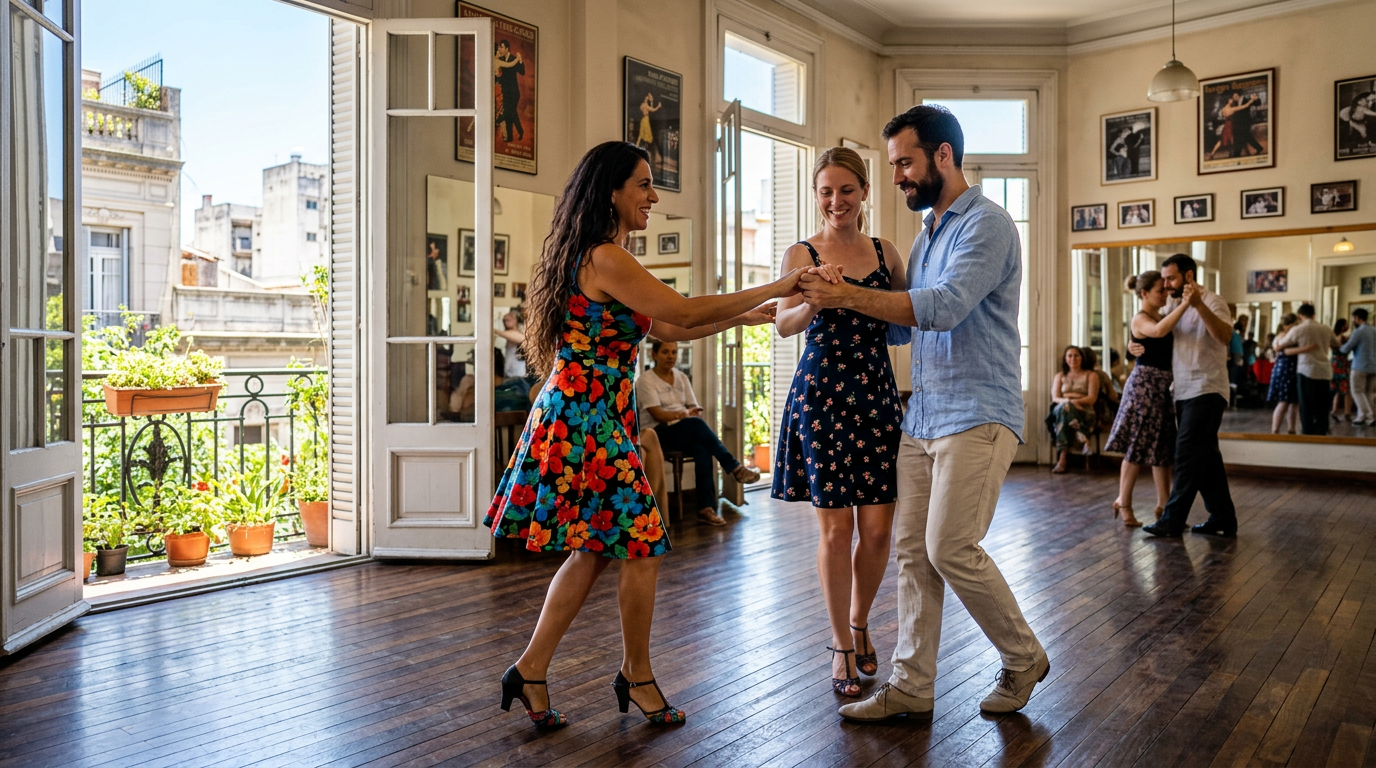
Many visitor-friendly milongas offer beginner lessons before the social dancing begins. In about an hour, you can learn the basic walk, embrace and a few simple movements.
You will not leave looking like someone who has danced tango for ten years.
You do not need to.
The goal is simply to understand enough to enjoy the dance floor rather than watch it from the edge.
Where to see tango in San Telmo
If one neighborhood is associated with tango in the imagination of visitors, it is San Telmo.
Cobblestone streets, historic buildings, old cafés and the Sunday market along Calle Defensa make it an easy place to combine tango with a day exploring one of Buenos Aires’ oldest neighborhoods.
Plaza Dorrego: tango in the street
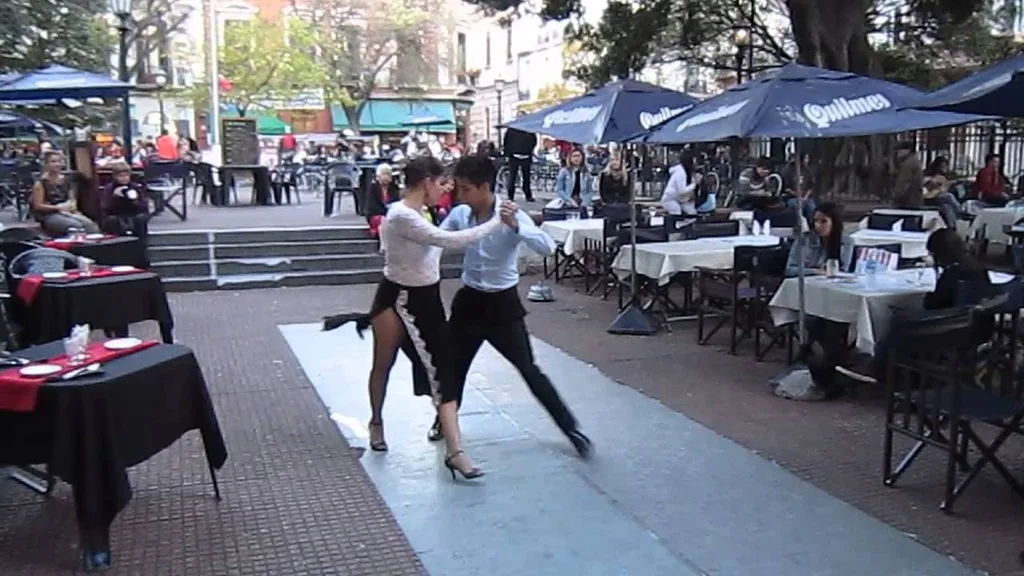
Plaza Dorrego is the simplest introduction.
On weekends, particularly around the Sunday market, tango dancers often perform in or around the square.
You can stop for a few minutes, watch a couple of songs and leave a tip if you enjoyed the performance.
It is informal, public and easy to include while exploring San Telmo.
Do not confuse it with a complete tango show or a milonga. Think of it as a short encounter with tango rather than an entire evening.
El Viejo Almacén
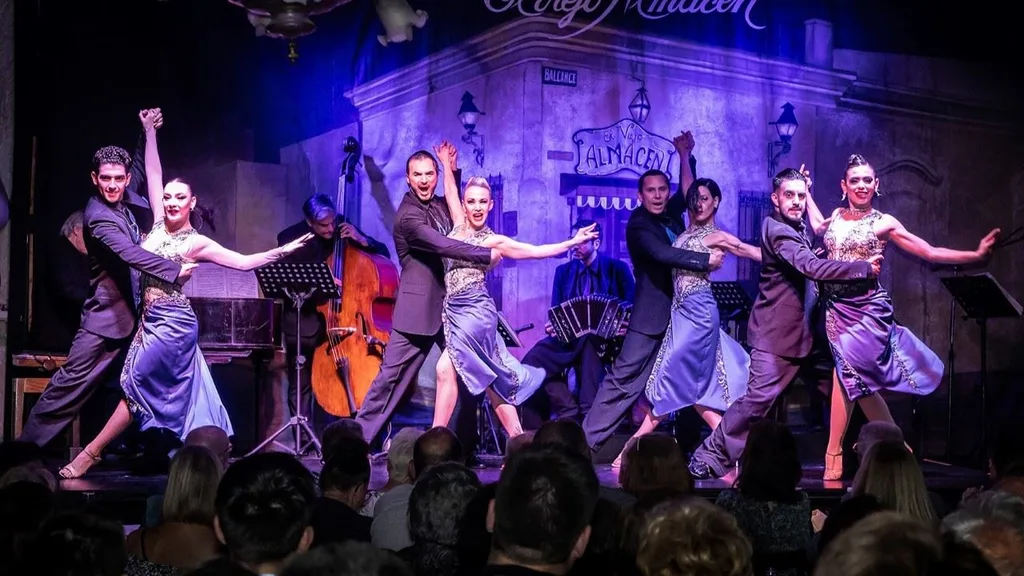
El Viejo Almacén is one of the historic names associated with tango in Buenos Aires.
Its story as a tanguería dates to 1969, when singer Edmundo Rivero transformed the historic building into a venue dedicated to tango.
Today, it offers the classic format of professional dancers, musicians, singers and dinner options.
It works well for travelers who want a traditional evening in San Telmo without having to understand the etiquette of a milonga.
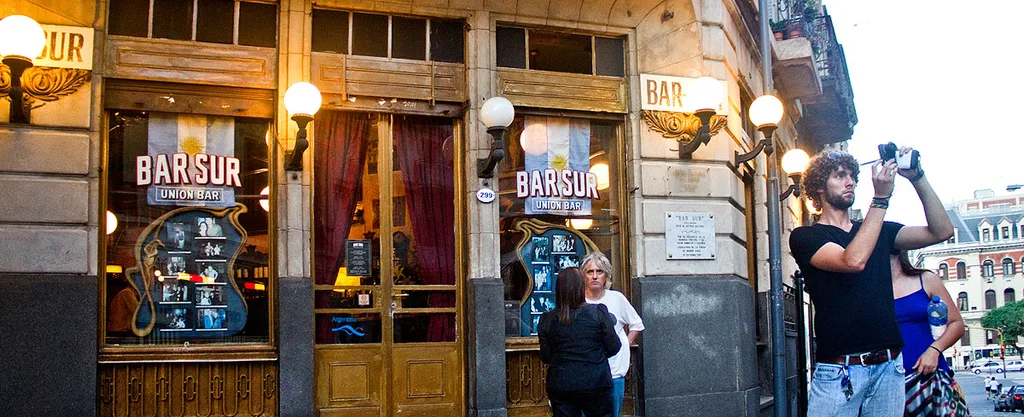
Bar Sur
Bar Sur offers a noticeably more intimate experience.
The venue is small, historic and closely associated with the traditional nightlife of San Telmo.
Instead of watching a large theatrical production from a distant table, the dancers and musicians perform much closer to the audience.
It is a good option if atmosphere matters more to you than scale.
Because the room is small, booking ahead makes sense, particularly on popular nights.
El Querandí
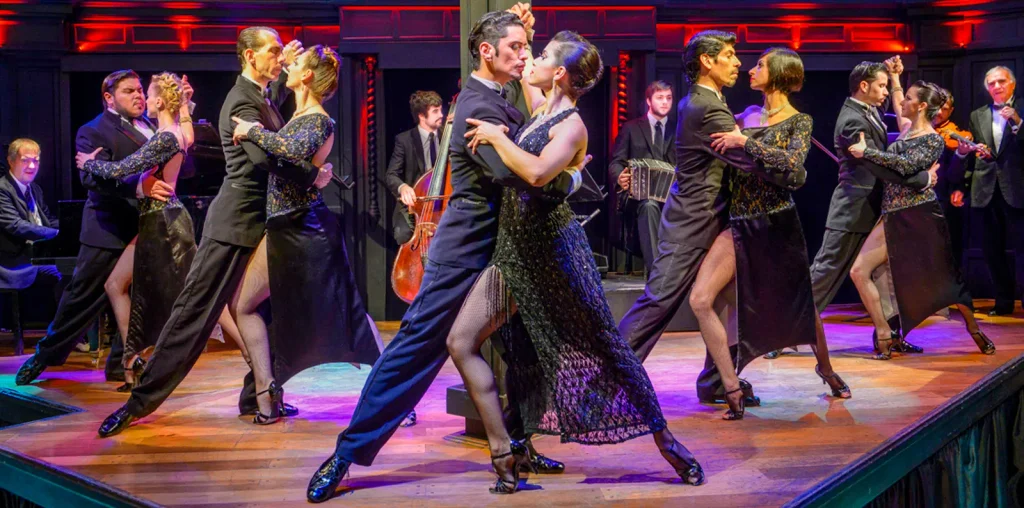
El Querandí is another traditional choice in the historic center.
Its show follows the development of tango through different periods, combining dancers, singers and a live orchestra.
The venue offers several formats, including show-only and dinner-show experiences, which makes it useful if you want to decide separately where to eat.
The building itself is part of the experience, with an early-20th-century atmosphere that fits naturally with the story being told on stage.
La Ventana
La Ventana is one of the larger tango venues in San Telmo.
It occupies a restored historic conventillo and offers a bigger production than the intimate rooms nearby.
This is the type of place to consider if you want a full evening production, are traveling with a group, or prefer a larger show with tango, musicians and additional elements of Argentine folklore.
Which Buenos Aires tango show should you choose?
There is no need to attend several traditional dinner shows on the same trip.
The basic format will begin to repeat itself.
Instead, choose according to the atmosphere you prefer.
Choose an intimate tango show if…
You want to sit close to the dancers, prefer a smaller room and care about atmosphere more than production size.
Bar Sur is the type of venue that fits this style.
Choose a traditional historic tango house if…
You want the classic Buenos Aires dinner-show experience in a venue with a long connection to tango.
El Viejo Almacén and El Querandí fit naturally into this category.
Choose a larger production if…
You are traveling with a group or want a more elaborate night with a larger cast and a broader production.
La Ventana is closer to this style.
Where to experience a milonga in Buenos Aires
After seeing tango on stage, a milonga shows you the other side of the dance.
There is less choreography and more observation.
Couples adapt to each other, to the music and to the movement of everyone else on the floor.
If your goal is to understand tango as part of everyday Buenos Aires culture, spending at least one night at a milonga is worthwhile.
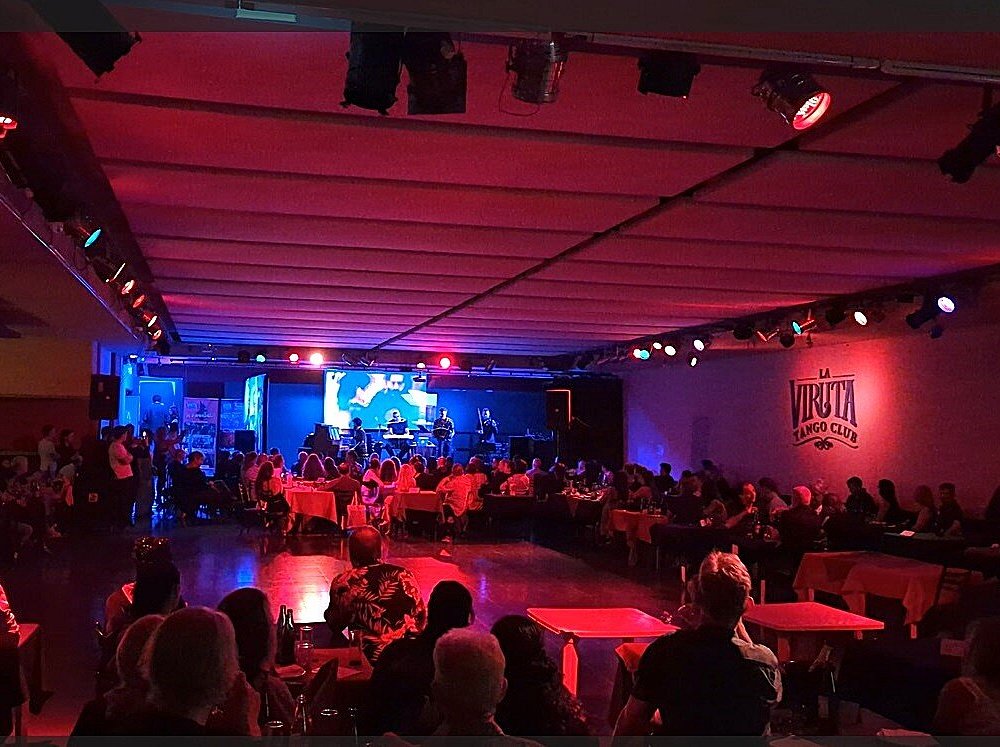
La Viruta: an easy first milonga
La Viruta, in Palermo, is often one of the easiest places for newcomers to understand the social side of tango.
Classes are an important part of the experience, and the audience can include regular dancers, beginners and international visitors.
That mixture makes it less intimidating if this is your first milonga.
Arrive for a lesson, stay afterward and watch how the room changes once more experienced dancers take the floor.
La Catedral: tango in Almagro
La Catedral offers a very different atmosphere from the formal tango houses in San Telmo.
The large room, eclectic decoration and informal mood make it feel more like a cultural space than a dinner-show venue.
It is well suited to travelers who want a relaxed introduction to social tango.
Classes and events vary, so check the current program before going.
Salón Canning: a more traditional dance floor
Salón Canning is associated with a more classic milonga experience.
The focus is the dance floor rather than a tourist performance.
For a visitor, the pleasure comes from sitting near the floor and watching experienced dancers move through the ronda.
If you plan to dance, taking at least one class beforehand will make the experience much easier.
Club Gricel: neighborhood tango culture
Club Gricel, in San Cristóbal, feels more like a neighborhood social club than a tourist attraction.
Different organizers use the room for milongas and classes throughout the week.
This is a good choice once you already understand some basic tango etiquette and want to see a room where many people are there primarily to dance rather than to watch.
Outdoor tango in Buenos Aires
Not every tango experience happens indoors.
Buenos Aires also has a tradition of outdoor dancing, including gatherings in parks and public spaces.
The Glorieta Antonio Malvagni in Belgrano is one of the names associated with open-air tango.
Outdoor schedules depend heavily on the day, season and weather, so treat these as spontaneous additions rather than the only tango plan of your trip.
How a Buenos Aires milonga actually works
A milonga makes much more sense when you understand a few basic customs.
You do not need to memorize a rulebook, but knowing how the room works will make you feel far more comfortable.
The ronda
Couples generally move counterclockwise around the dance floor.
This circulating line is called the ronda.
Avoid walking across the dance floor while people are dancing, and if you join in, try to follow the flow instead of overtaking everyone around you.
The cabeceo
In many traditional milongas, dancers invite each other using eye contact.
This invitation is called the cabeceo.
One person looks across the room. If the other person returns the look and nods, they meet near the dance floor.
Newer and more informal venues may be much less strict about this custom.
Tandas and cortinas
Tango music at a milonga is usually organized into groups of songs called tandas.
A tanda commonly contains several songs by the same orchestra or of a similar style.
Between tandas, a short piece of unrelated music called a cortina signals that the set has finished.
Couples normally leave the floor at that point.
Can you go to a milonga just to watch?
Yes.
Many visitors spend their first milonga sitting beside the floor and observing.
Choose a table where you can see the dancers without blocking the circulation around the room.
If you decide you want to participate, arriving for the beginner class is the easiest transition from spectator to dancer.
Taking a tango class in Buenos Aires
You do not need previous dance experience to take a tango class.
In fact, Buenos Aires is one of the best places to start because you can immediately see how what you learned works on a real social dance floor.
Start with a pre-milonga class
For most travelers, this is the best option.
Attend the class before a milonga, learn the basic movements and then stay to watch or dance afterward.
It requires only one evening and gives context to everything happening on the floor.
Take a private tango class
A private lesson makes sense if you enjoyed your first class and want to improve quickly.
One-on-one instruction can correct posture, balance, walking and the embrace much faster than a large group class.
For a short trip, one private class followed by a milonga can be more useful than several beginner group lessons.
Stay longer and combine classes with milongas
If tango is one of the main reasons for visiting Buenos Aires, give it several days.
Three classes combined with two or three milongas will teach you much more about the dance than attending several stage shows.
You begin to recognize orchestras, understand the structure of a tanda and notice how experienced dancers navigate a crowded floor.
What shoes and clothes should you wear to a milonga?
Shoes matter more than dressing like a tango dancer.
Footwear with a sole that allows you to pivot easily is much better than hiking shoes or sneakers with heavy rubber soles.
If you plan to dance several times during your stay, Buenos Aires has plenty of shops specializing in tango shoes.
For clothing, smart casual is enough for most visitor-friendly milongas.
Traditional rooms can be slightly more formal.
You do not need a tango costume.
Tango show with dinner or show only?
This is one of the most useful choices to make before booking.
Choose show only if…
You already have a restaurant you want to try.
Buenos Aires has enough good restaurants that there is no reason to sacrifice a meal you are excited about just because the show offers dinner.
Eat first, then go to the performance.
Choose dinner and show if…
You prefer an easy evening with transportation, food and entertainment organized together.
It is especially convenient after a long day of sightseeing or if you do not want to coordinate several reservations.
Neither option is inherently better. They simply solve different travel problems.
Do you need to book tango in advance?
For a traditional tango show, booking ahead is sensible, particularly for Friday and Saturday nights.
Smaller venues have limited seating.
For milongas, planning several weeks ahead is usually unnecessary.
Milonga schedules can change, and individual organizers may use the same dance hall on different days.
Check the venue or organizer on the day you plan to visit.
For classes, booking requirements depend on whether you are taking a drop-in group lesson or arranging a private instructor.
What is the best neighborhood for tango in Buenos Aires?
There is no single answer because the type of tango changes by neighborhood.
San Telmo
Best for historic atmosphere, traditional tango shows and combining tango with daytime sightseeing.
Palermo
Convenient for travelers staying in one of Buenos Aires’ main hotel and restaurant districts, with accessible social tango options nearby.
Almagro
A better choice if you want to move away from the dinner-show circuit and explore tango as a local social activity.
San Cristóbal
Worth considering once you are comfortable with milonga etiquette and want a more neighborhood-oriented experience.
Is La Boca a good place to see tango?
Caminito often has tango dancers performing for visitors during the day, and it can be fun to watch while exploring La Boca.
But it should not be confused with the city’s evening milonga culture.
Treat Caminito as a daytime sightseeing stop rather than the center of your tango nightlife plans.
For the evening, San Telmo, Palermo, Almagro and other established milonga areas offer more options.
A simple tango itinerary for first-time visitors
If this is your first trip to Buenos Aires, you do not need to turn every night into a tango night.
A simple progression works better.
Day 1: see tango casually
Explore San Telmo.
If you are there on a busy weekend afternoon, stop around Plaza Dorrego and watch the street performers.
Do not book anything else yet.
Day 2: take a class and visit a milonga
Choose a beginner-friendly venue in Palermo or Almagro.
Take the introductory class, stay for the social dance and spend some time simply watching.
Try dancing if you feel comfortable.
Day 3: watch a professional tango show
Return to San Telmo for one traditional stage performance.
Choose a small intimate venue or a larger production depending on what you enjoyed during the previous nights.
After seeing both sides, the difference between tango as performance and tango as social culture becomes much clearer.
How much tango is enough?
For most first-time visitors, the ideal combination is simple:
one tango show + one milonga + one tango class.
That gives you three perspectives on the same culture.
The show demonstrates what professional dancers can do.
The milonga shows you how tango lives socially.
The class lets you understand the movement from inside the embrace rather than from a chair.
Three dinner shows cannot give you that variety.
Frequently asked questions about tango in Buenos Aires
Where is the best place to see tango in Buenos Aires?
San Telmo is the easiest neighborhood for traditional tango shows, while Palermo, Almagro and San Cristóbal offer more opportunities to experience social tango at milongas.
What is the difference between a tango show and a milonga?
A tango show is a professional stage performance for an audience. A milonga is a social dance where people come primarily to dance with each other.
Can tourists go to milongas in Buenos Aires?
Yes. Many milongas welcome visitors, including people who only want to watch. Beginner classes before the social dance are a good way to become familiar with the basic etiquette.
Do I need to know how to dance tango?
No. You can attend both shows and milongas without knowing how to dance. If you want to participate at a milonga, taking a beginner class first will make the experience more enjoyable.
Should I book a tango show with dinner?
Choose dinner and show if convenience is important. Choose show only if you would rather eat at another Buenos Aires restaurant before the performance.
How many tango nights should I plan?
For a first visit, one show, one milonga and one class are usually enough to experience the main sides of tango without repeating the same type of evening.
Tango is not one Buenos Aires experience
The biggest mistake is treating tango as a single attraction that you check off a list.
A couple performing in Plaza Dorrego, professional dancers on a San Telmo stage and a crowded milonga in Almagro are all tango, but they tell very different stories about Buenos Aires.
If you have time, experience more than one.
Watch the performance. Sit beside the dance floor. Then take a class and understand why walking a few steps with another person can be far more complicated than it looks.
At MVP Experiences, we plan tango nights around that difference between the stage and the dance floor. A show is something you watch. A milonga is something you enter. A class gives you the chance to understand both.