
Sitting at 3,800 m s. n. m. along the border between Peru and Bolivia, Lake Titicaca is South America’s largest lake by volume and the highest navigable body of water on the planet. Its deep blue surface mirrors the surrounding mountain ranges, and its shores hold living cultures that trace back thousands of years. The lake stays a comfortable destination for travelers, though a few simple precautions help: drink water often to adjust to the elevation, take the first day at a relaxed pace, and keep an eye on your belongings in busy markets and boarding areas. What follows is a practical guide to what you can see and do here, and why this corner of the highlands earns a place on your itinerary.
Natural Setting
The scenery around Titicaca is hard to match. Its waters stretch across roughly 8,372 square kilometers (3,232 square miles), reflecting the peaks that frame the horizon and shifting color with the light through the day. The lake supports species you won’t find anywhere else, from the flightless Titicaca grebe to the giant frog that lives in its depths. You can cross the water by boat, watching the shoreline villages and terraced slopes slide past as the highland air sharpens every view.
Living Culture
Titicaca means more than open water. For the communities who have lived along its edges for generations, the lake is sacred ground, tied to origin stories and everyday ritual alike. Ancient sites, ceremonial spots, and working villages sit scattered across islands and shore, and each one opens a window into a way of life still very much in practice. Spending time with the Quechua, Aymara, and Uros peoples lets you see their customs, language, and craft up close, on their terms rather than through a museum case.
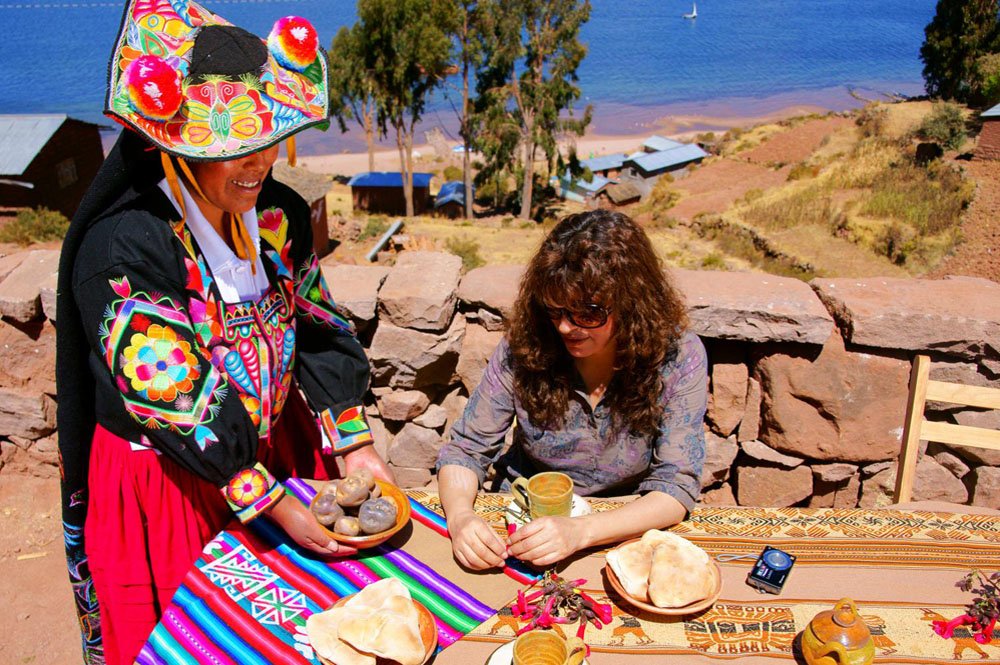
Uros Floating Islands
No visit feels complete without a stop at the Uros floating islands. The Uros built these platforms by hand from totora reeds that grow thick in the shallows, layering fresh reeds on top as the base ones rot away underneath. Walking across the springy surface is an experience in itself. The families who live here will show you how they fish, weave, cook, and maintain the islands, and the visit tends to leave people thinking about how much can be built from a single plant and a lot of know-how.

Taquile Island
Taquile draws travelers for its wide views, stone-lined terraces, and above all its textile tradition. The Quechua-speaking Taquileños are known for hand-woven cloth so refined that UNESCO named it a Masterpiece of the Oral and Intangible Heritage of Humanity. Here the men knit and the women spin, and the patterns carry meaning tied to age and status within the community. You can climb the paths that lace the island, take in the water on every side, and buy pieces straight from the people who made them.
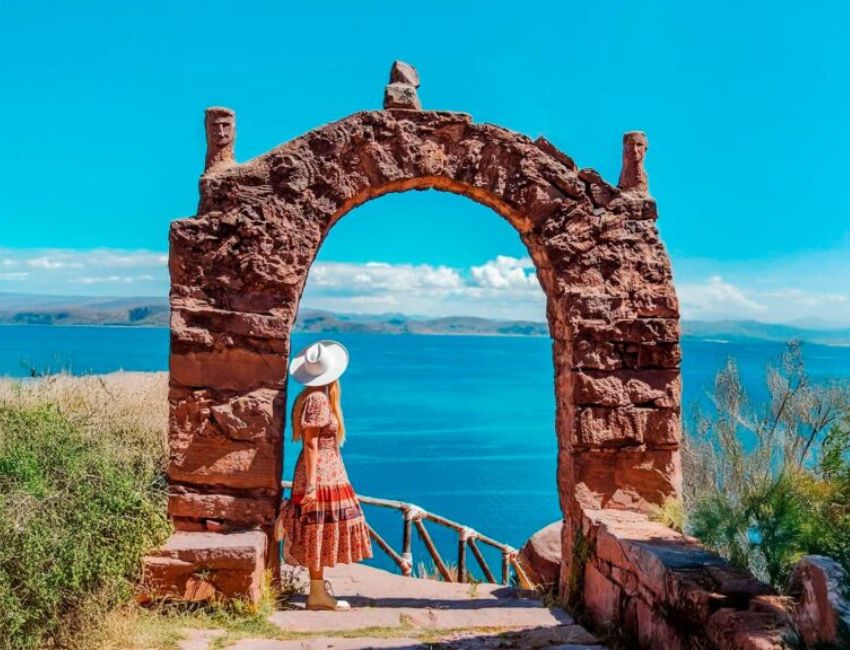
Amantani Island
If you want to go deeper, Amantani is the place for it. This quieter island keeps its farming rhythms and older customs largely intact, and the main way to experience it is a homestay. You sleep in a family’s house, eat what they eat, help with a few tasks, and in the evening join the music and dancing that mark a visit. It’s a slower, more personal side of the lake, and the connection you make with your hosts is usually what people remember most.
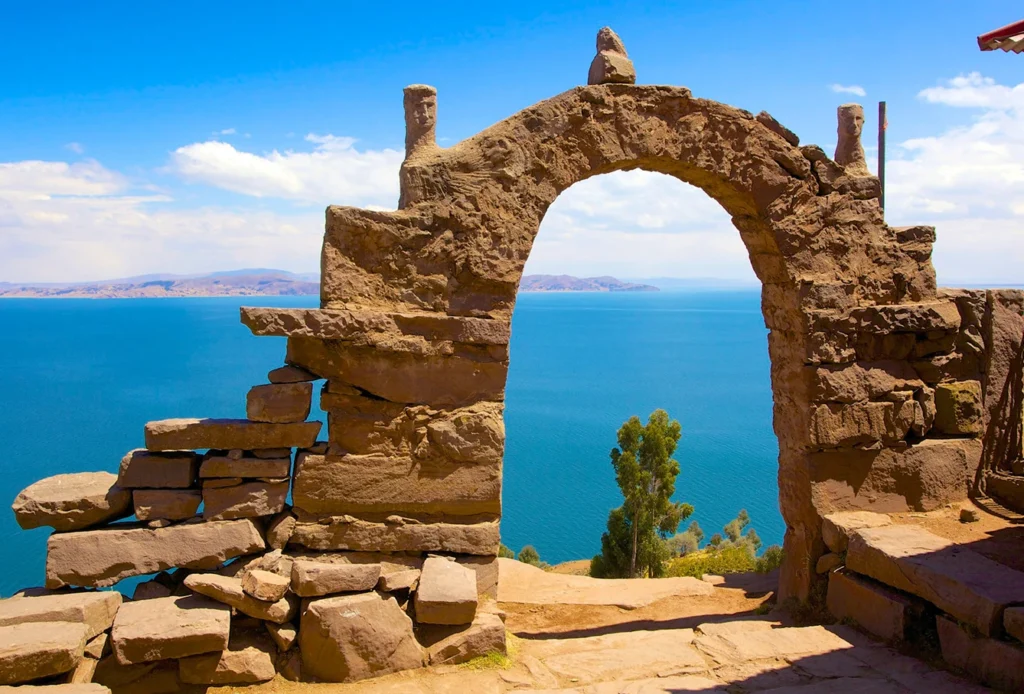
Puno
Most trips begin in Puno, the port city on the western shore that serves as your base. Its markets spill over with color, its streets mix colonial buildings with everyday bustle, and its calendar fills with festivals that turn the whole town out to dance. Give yourself an afternoon here before heading onto the water. If your timing lines up with the Fiesta de la Candelaria in February, you’ll catch one of the largest folk celebrations on the continent.
Plan Your Titicaca Tour
From the reed islands of the Uros to the terraces of Taquile and the family homes of Amantani, Lake Titicaca offers a rare mix of scenery, tradition, and warm welcome in a single trip. Whether you have a single day or several, there’s a route that fits. Get in touch to book your Lake Titicaca tour and let us handle the boats, the timing, and the local connections so you can focus on the experience.