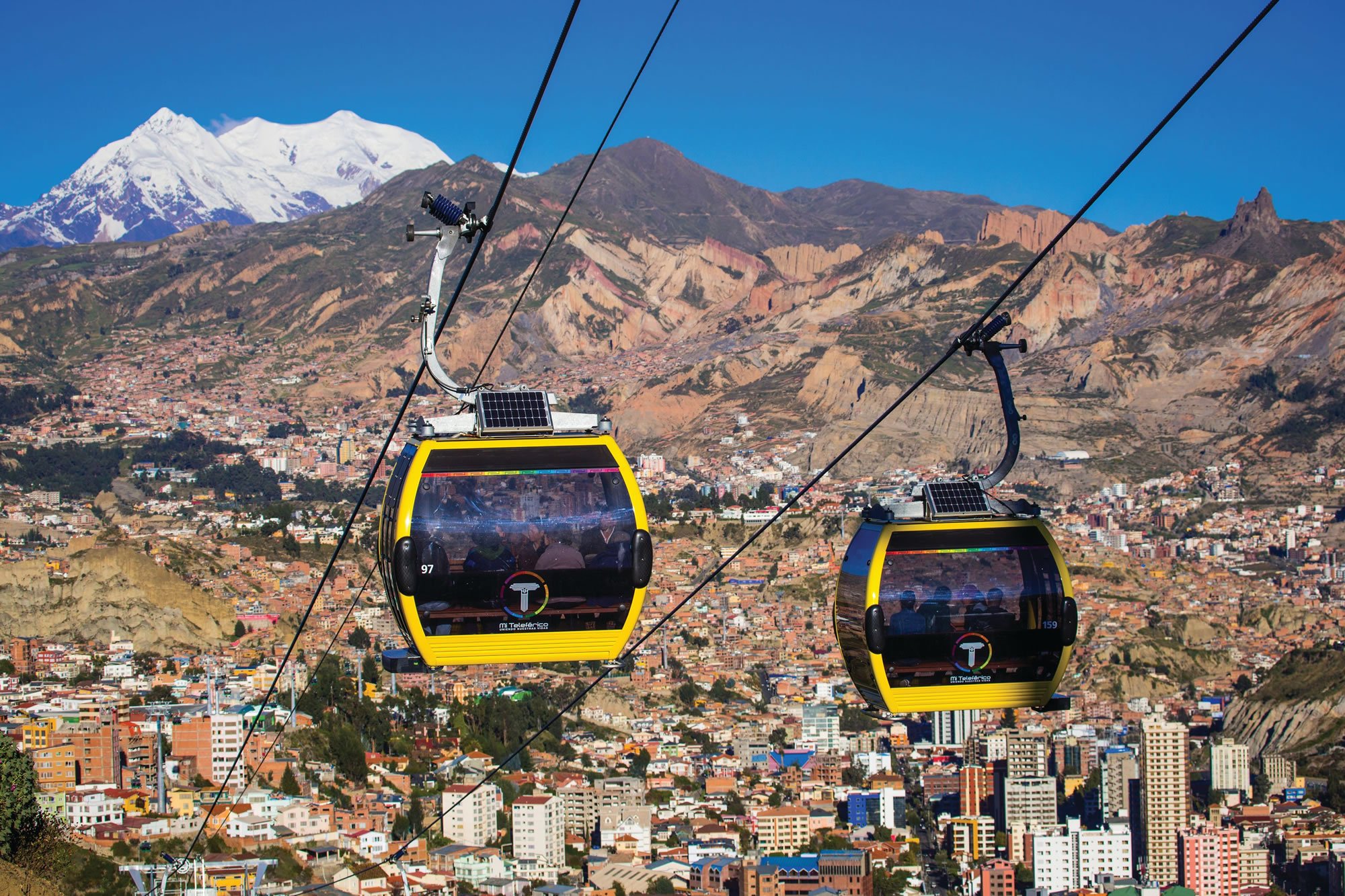
La Paz is unlike any other city in South America. It spills down a deep canyon beneath snowcapped peaks, with cable cars gliding over rooftops and markets where Andean traditions are part of daily life. For travelers coming from Peru, it is the natural next step after Lake Titicaca and a gateway to some of Bolivia’s most striking landscapes. This guide covers what to see in the city, the best day trips and how to fit La Paz into your route.
La Paz or Sucre: Which Is the Capital?
Bolivia has two capitals. Sucre is the constitutional capital, while La Paz is the seat of government, where the presidency and congress are based. Because of this, La Paz is often called the highest capital in the world, with its center at around 3,640 m a.s.l.
A City Built in a Canyon
Illimani and the surrounding peaks
Illimani, at about 6,438 m a.s.l., rises southeast of the city and appears at the end of many streets. On clear days you can also see Huayna Potosí and other peaks of the Cordillera Real, which frame the city in white.
From El Alto to the Zona Sur
La Paz changes with altitude. El Alto, on the plateau above, sits over 4,000 m a.s.l. and is where the international airport is located. The center lies in the middle of the canyon, while the Zona Sur, lower and warmer, is a residential area with restaurants, shopping centers and green spaces. The difference in height between the top and bottom of the city is several hundred meters.
Riding Mi Teleférico
La Paz has one of the largest urban cable car networks in the world, known as Mi Teleférico. Each line is named after a color, and together they connect El Alto, the center and the Zona Sur. It is cheap, safe and one of the best ways to understand the city’s layout.
Best lines for views
The Red Line climbs from the old train station to El Alto, with sweeping views of the canyon. The Yellow and Green lines pass over the southern neighborhoods with Illimani in the background. Ride at sunset for the best light and again after dark, when the city lights fill the valley.
The Colonial Center
Plaza Murillo
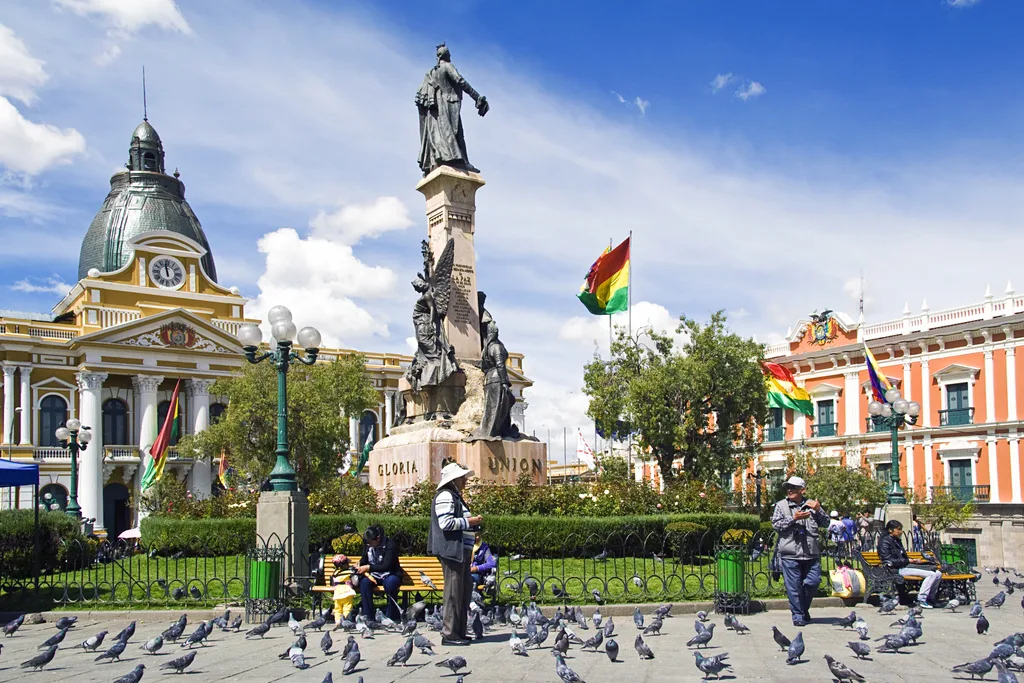
Plaza Murillo is the political heart of Bolivia, surrounded by the Government Palace, the Legislative Assembly and the Cathedral. It is busy with pigeons, families and street vendors, and it is a good starting point for a walking tour.
San Francisco Basilica
Built in the 18th century, the San Francisco Basilica combines Spanish baroque with indigenous motifs carved into its stone facade. You can climb to the rooftop for views over the busy plaza below.

Calle Jaén and its museums
Calle Jaén is a short, colorful colonial street with several small museums, including one dedicated to musical instruments and others covering Bolivian history and silver work. It is one of the most photogenic corners of the city.
The Witches’ Market and Andean Beliefs
A few blocks above San Francisco, the Witches’ Market is lined with stalls selling herbs, amulets, candles and dried llama fetuses. These items are used in offerings to Pachamama, especially when building a new house. Vendors known as yatiris, traditional healers and fortune tellers, work nearby. Ask before taking photos, as many vendors prefer not to be photographed.
El Alto on Market Day
The 16 de Julio market
On Thursdays and Sundays, El Alto hosts one of the largest open-air markets in South America. Stalls stretch for kilometers, selling everything from car parts to clothing, food and antiques. Go with a guide or keep your belongings close, as it gets very crowded.
Cholets: Andean architecture
El Alto is also known for cholets, colorful buildings designed with geometric patterns inspired by Andean culture. They usually house a shop on the ground floor, a party hall in the middle and a family home on top. They reflect the rise of an Aymara middle class.
Cholita wrestling
On certain days, women wearing traditional dresses and bowler hats, known as cholitas, take part in theatrical wrestling shows in El Alto. It is a mix of sport, humor and cultural pride that visitors often find surprising and entertaining.
Valle de la Luna
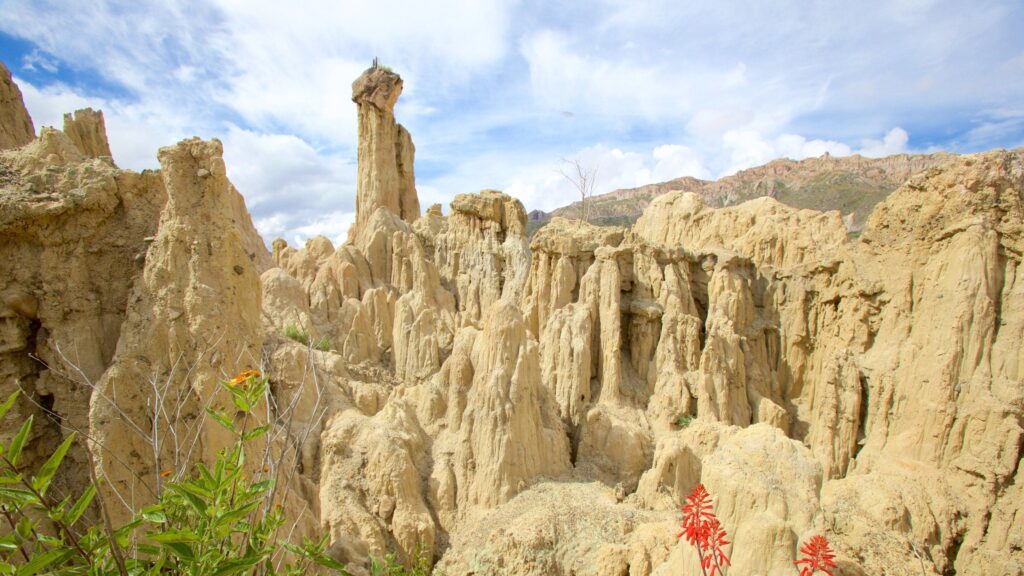
About 10 km from the center, the Valle de la Luna is a landscape of clay spires and eroded formations created by wind and rain. Short walking trails take less than an hour, and the site is easy to combine with a visit to the Zona Sur.
Day Trips from La Paz
Tiwanaku
Around 70 km from La Paz, Tiwanaku was the center of a powerful civilization that flourished long before the Incas. The site includes the Gate of the Sun, the Akapana pyramid and a sunken temple with carved stone heads. It is a UNESCO World Heritage Site and makes a rewarding half-day or full-day trip.

The Death Road by bike
The old Yungas road, known as the Death Road, is famous for mountain biking. The ride starts at a high pass above 4,600 m a.s.l. and descends more than 3,000 meters to the subtropical valleys near Coroico, passing waterfalls and steep cliffs.
Choosing a safe bike operator
Choose an operator with well-maintained bikes, good brakes, protective gear and experienced guides. Cheaper options often cut corners on equipment, which matters on a road with sharp drops.
Chacaltaya
Chacaltaya, once home to the world’s highest ski slope, now offers a short hike with panoramic views of the Cordillera Real and Lake Titicaca in the distance. Its altitude, above 5,000 m a.s.l., makes it suitable only after several days in La Paz.
Salteñas, Singani and Other Local Flavors
The salteña is La Paz’s favorite mid-morning snack, a baked pastry filled with a juicy stew of meat, potato and spices. Eat it upright to avoid spilling the filling. Other local favorites include the sandwich de chola, filled with roast pork, and api with pastries on cold mornings. Singani, a grape spirit, is Bolivia’s national drink and appears in many cocktails. La Paz also has a growing fine-dining scene focused on Bolivian ingredients.

Arriving from Peru by Land
Most travelers arrive from Puno. The most scenic route goes through the border at Kasani to Copacabana, on the shores of Lake Titicaca, and continues to La Paz, crossing the Strait of Tiquina by boat while the bus crosses on a barge. The other route, via Desaguadero, is faster but less scenic. Check entry requirements for your nationality before you travel, as some visitors need a visa.
Continuing South to Uyuni
La Paz is the main starting point for trips to the south of Bolivia. Overnight buses and short flights connect the city with Uyuni, where the salt flat and the high-altitude lagoons await. Plan that part of your trip with our guide to the Uyuni salt flat.
La Paz Within a Two-Country Itinerary
La Paz fits naturally after Cusco and Lake Titicaca. Arriving from the lake means your body is already adapted to altitude, which makes the city easier to enjoy. Two or three days are enough for the center, the cable cars and one day trip. If you want this crossing planned for you, our Peru and Bolivia route connects Peru’s highlights with La Paz and Bolivia.
Frequently Asked Questions
How many days should I spend in La Paz?
Two or three days let you explore the center, ride the cable cars and take one day trip, such as Tiwanaku or the Death Road.
Is La Paz higher than Cusco?
Yes. The center of La Paz sits a few hundred meters higher than Cusco, and El Alto is higher still.
What currency is used in Bolivia?
The boliviano (BOB). US dollars are accepted in some hotels and tour agencies, but you will need local currency for markets, taxis and small restaurants.
Is it safe to use taxis in La Paz?
Use radio taxis booked through your hotel or ride apps. Avoid taking unmarked taxis on the street, especially at night.
Can I visit La Paz as a day trip from Puno?
It is not recommended. The journey takes several hours in each direction and leaves almost no time to explore the city.
Is the Death Road safe to ride?
With a reputable operator and good equipment, most riders finish without problems. The risk increases with poor bikes, rushing and ignoring guide instructions.