San Pedro de Atacama is a small adobe town in northern Chile, surrounded by salt flats, volcanoes, geysers and high-altitude lagoons. It sits at about 2,400 m a.s.l. on the edge of the Atacama Desert, one of the driest places on Earth.
The town itself is quiet, with dirt streets, a colonial church and a small main square. What brings you here are the landscapes around it, reached on day tours that leave from town every morning. This guide shows you how many days to plan, which tours to choose and how to prepare for the altitude and the desert climate.
How to get to San Pedro de Atacama
The closest airport is in Calama, about 100 km away. There are several daily flights from Santiago, and the flight takes around 2 hours.
From Calama, you reach San Pedro in about 1.5 hours by:
- Shared transfer: vans wait at the airport and drop you at your hotel
- Private transfer: faster and more flexible, especially for groups
- Bus: services from Calama bus terminal to San Pedro several times a day
If you are traveling overland from Bolivia, San Pedro is the end point of the 3-day tours from the Uyuni Salt Flats, which cross the border at Hito Cajón.
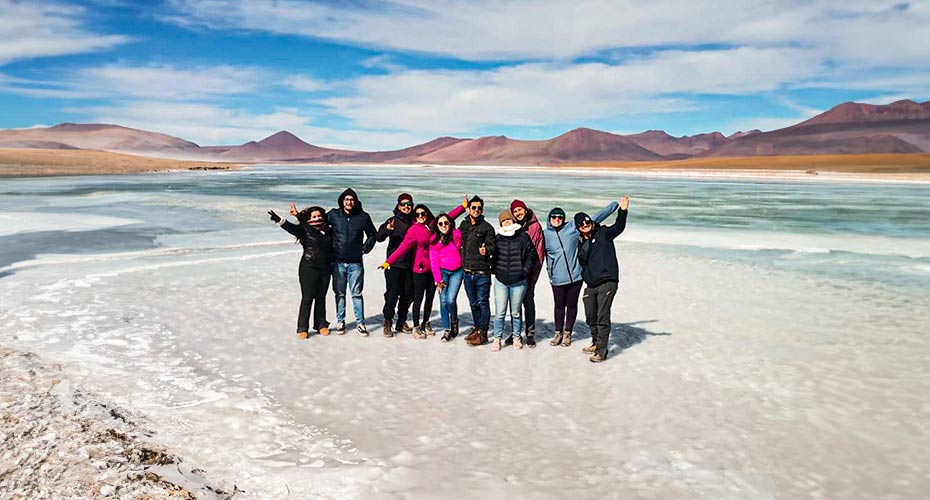
How many days do you need in San Pedro de Atacama
- 3 days: enough for the main highlights, but with early starts every day
- 4 to 5 days: the ideal amount, with time to acclimatize and a slower pace
- 6 days or more: lets you add hot springs, hikes, cycling and less visited valleys
Plan your tours so that the lower-altitude ones come first and the high-altitude trips, like El Tatio and the altiplanic lagoons, come later.
Best tours and places to visit
Moon Valley (Valle de la Luna)
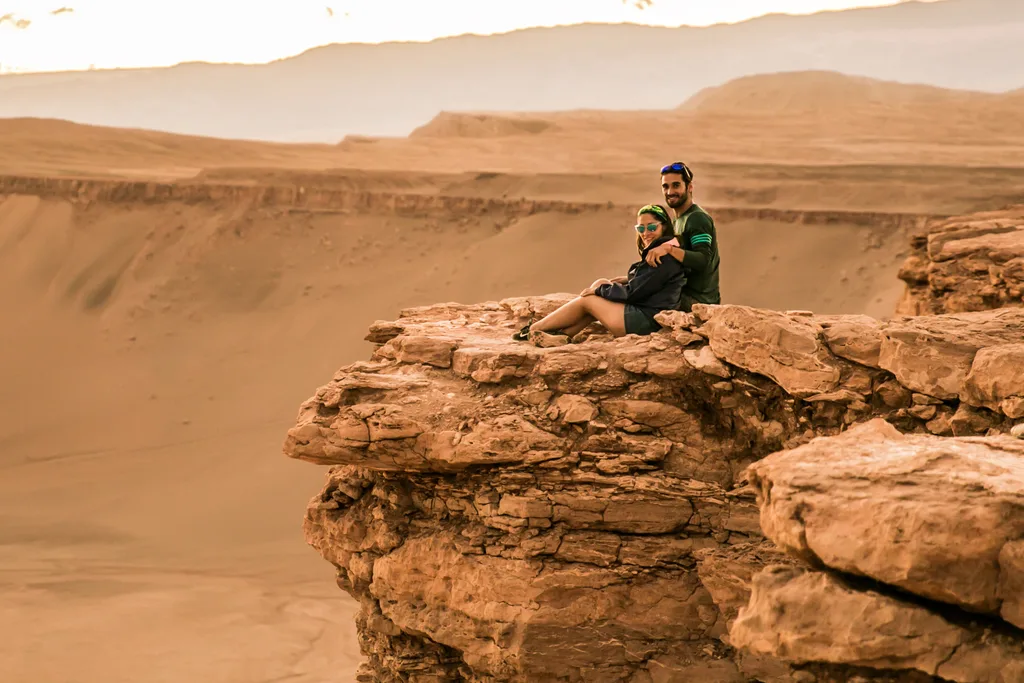
Moon Valley is the most famous landscape near San Pedro, just a few kilometers from town. Wind and water have shaped its salt and clay formations into ridges, dunes and caves that look like another world.
Most visitors go in the afternoon to watch the sunset from a viewpoint over the valley, when the rocks turn orange, pink and purple. You can visit with a tour or by bike, but check whether you need to reserve your entry in advance, since access is managed with limited capacity.
El Tatio Geysers
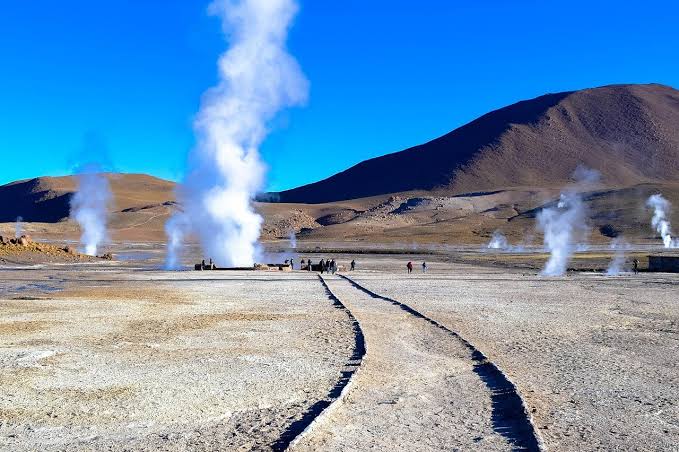
El Tatio is one of the largest geyser fields in the Southern Hemisphere, at over 4,300 m a.s.l. Tours leave San Pedro around 4:30 or 5:00 a.m. so you arrive at sunrise, when the cold air makes the steam columns larger and more visible.
It is very cold at dawn, often well below freezing, so dress in warm layers, gloves and a hat. Some tours stop at a natural hot pool near the geysers and visit the village of Machuca on the way back.
Altiplanic lagoons and Piedras Rojas
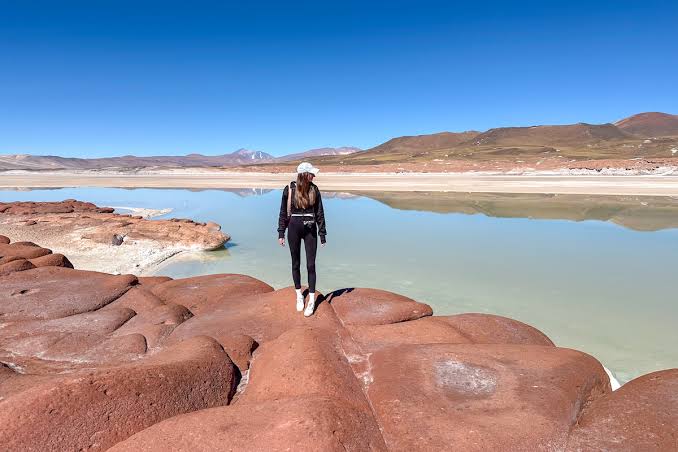
This full day tour takes you south of San Pedro to Laguna Miscanti and Laguna Miñiques, two deep blue lagoons at the foot of volcanoes, above 4,000 m a.s.l. Many tours continue to Piedras Rojas, where red rocks contrast with the white salt and turquoise water of the Salar de Talar.
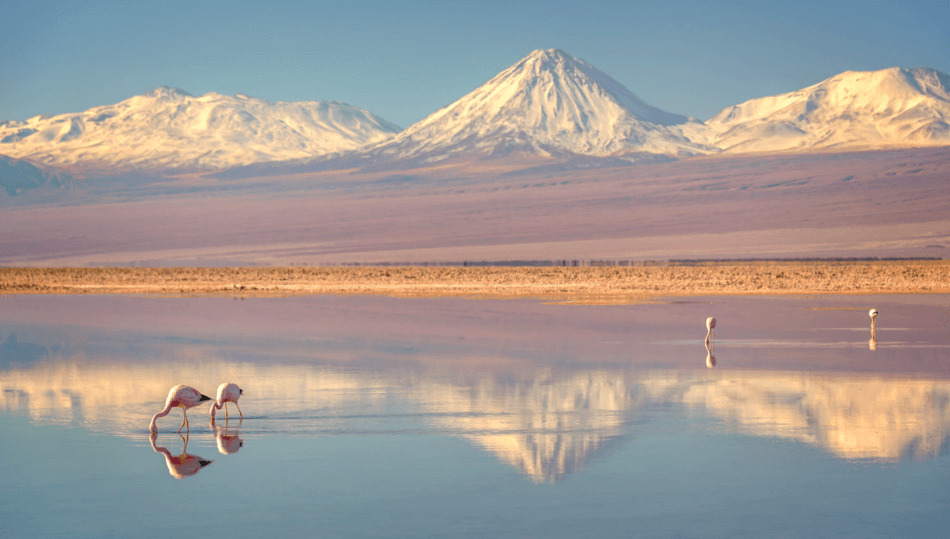
On the way, most itineraries stop at Laguna Chaxa, in the Salar de Atacama, where you can see flamingos feeding in the shallow water, and at the small village of Socaire.
Laguna Cejar and Ojos del Salar
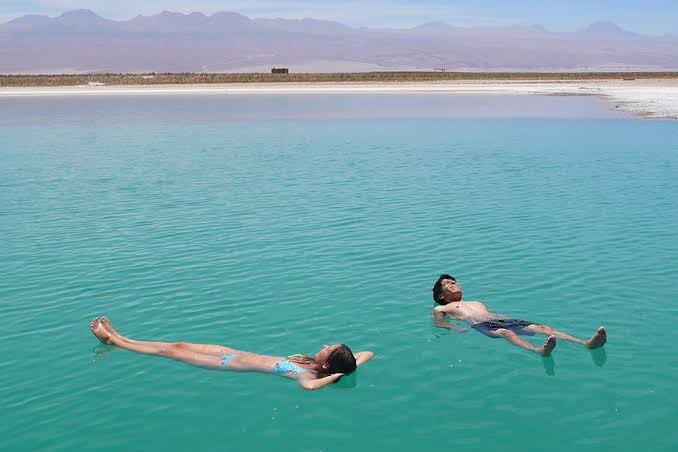
Laguna Cejar has such a high salt concentration that you float without effort, similar to the Dead Sea. Swimming rules change depending on the season and conservation measures, so check whether bathing is allowed when you book.
The tour usually includes Ojos del Salar, two freshwater pools in the middle of the desert, and ends at Laguna Tebinquinche with a sunset view over the salt flat.
Stargazing tours
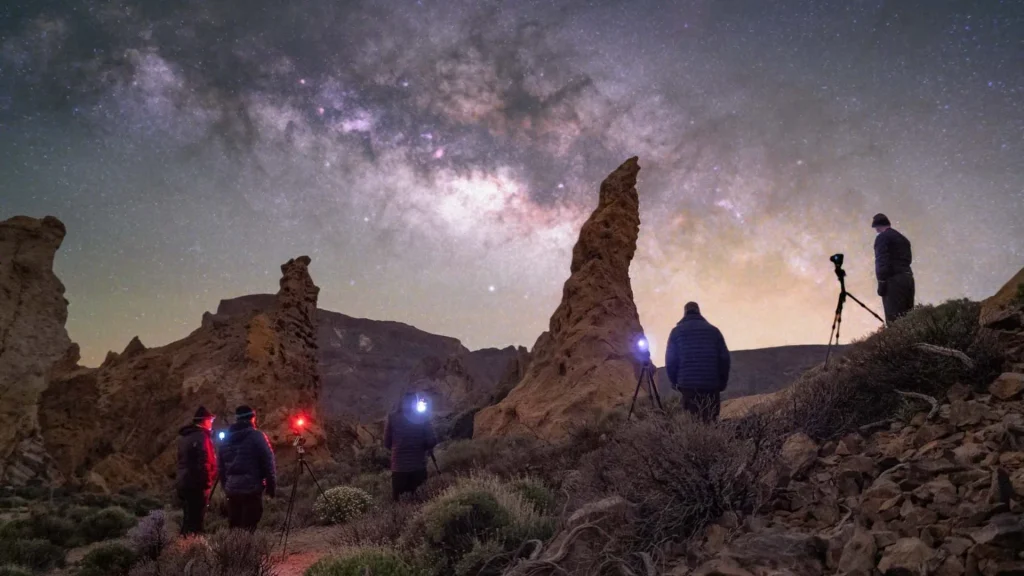
The Atacama Desert has some of the clearest skies in the world, which is why several international observatories are located in the region. Stargazing tours take you away from the town lights and use telescopes to show you planets, star clusters and nebulae.
Book your stargazing tour for nights close to the new moon. When the moon is full, its light hides many of the fainter stars.
Other places worth your time
- Rainbow Valley (Valle del Arcoíris): hills in shades of red, green and white, with ancient petroglyphs at Hierbas Buenas nearby
- Death Valley (Valle de la Muerte): tall dunes where you can try sandboarding
- Pukará de Quitor: a pre-Inca fortress on a hill just outside town, with views of the oasis
Sample itineraries
3 days
Day 1: Arrive, rest in town and visit Moon Valley at sunset.
Day 2: Altiplanic lagoons, Piedras Rojas and Laguna Chaxa.
Day 3: El Tatio Geysers at sunrise, afternoon at Laguna Cejar.
5 days
Day 1: Arrive and explore the town and Pukará de Quitor.
Day 2: Laguna Cejar and Ojos del Salar in the afternoon, stargazing at night.
Day 3: Altiplanic lagoons and Piedras Rojas.
Day 4: El Tatio Geysers and Puritama Hot Springs.
Day 5: Moon Valley at sunset or Rainbow Valley before your departure.
Altitude in San Pedro de Atacama
The town is not especially high, but most tours go much higher. El Tatio and the altiplanic lagoons are above 4,000 m a.s.l., so plan them for your second or third day.
To help your body adjust:
- Drink plenty of water, since the air is very dry
- Eat light meals and avoid alcohol before high-altitude tours
- Walk slowly when you reach the lagoons and geysers
If you arrive from Cusco or La Paz, you will already be acclimatized, and the high tours will feel easier.
Best time to visit
San Pedro is a year-round destination, but each season has trade-offs.
September to November and March to May: mild days, cold nights and fewer visitors. These are good months for most tours.
December to February: the warmest days and the busiest period. This is also when the altiplanic winter brings occasional storms to the high areas, which can close roads to El Tatio or the lagoons for a day or two.
June to August: clear skies and very cold nights, with temperatures that can drop well below zero at high altitude. Snow sometimes closes high-altitude routes.
Practical tips for your trip
- Book the key tours early: Moon Valley entries, stargazing and El Tatio fill up in high season.
- Carry cash: many sites are managed by local indigenous communities and charge separate entrance fees, usually paid in Chilean pesos.
- Protect yourself from the sun: use sunscreen, sunglasses and a hat, even when it feels cool.
- Pack for extremes: days are warm and nights are cold, so bring layers, a warm jacket and a swimsuit for the lagoons and hot springs.
- Plan for early mornings: several tours leave before sunrise, so organize your days to rest in the afternoon.
Frequently asked questions about San Pedro de Atacama
How many days are enough for San Pedro de Atacama?
Three days cover the main highlights. Four to five days let you acclimatize and add stargazing and hot springs.
Can you visit San Pedro de Atacama without a tour?
You can visit Moon Valley and nearby areas by bike or rental car. For El Tatio and the altiplanic lagoons, a tour is the easiest option because of the distances, altitude and road conditions.
What is the best tour in San Pedro de Atacama?
Most travelers rank the altiplanic lagoons and El Tatio Geysers as the most memorable. If you only have time for one, choose the lagoons tour for the variety of landscapes.
Is San Pedro de Atacama expensive?
It is one of the more expensive destinations in Chile because of its remote location. Tours, community entrance fees and hotels add up, so plan your budget in advance.
Can you travel from San Pedro de Atacama to Uyuni?
Yes. Three-day tours connect San Pedro with the Uyuni Salt Flats in Bolivia, crossing the border at Hito Cajón and visiting high lagoons, geysers and deserts on the way.
Discover the Atacama Desert with MVP Experiences
San Pedro de Atacama gives you some of the most unusual landscapes in South America, from salt flats and geysers to skies full of stars. It also connects naturally with Bolivia’s high desert, and if Uyuni is on your list, our Peru and Bolivia tour takes you to the salt flats and the Red Lagoon from La Paz. With MVP Experiences, your transfers, tours and border crossings are organized before you arrive.