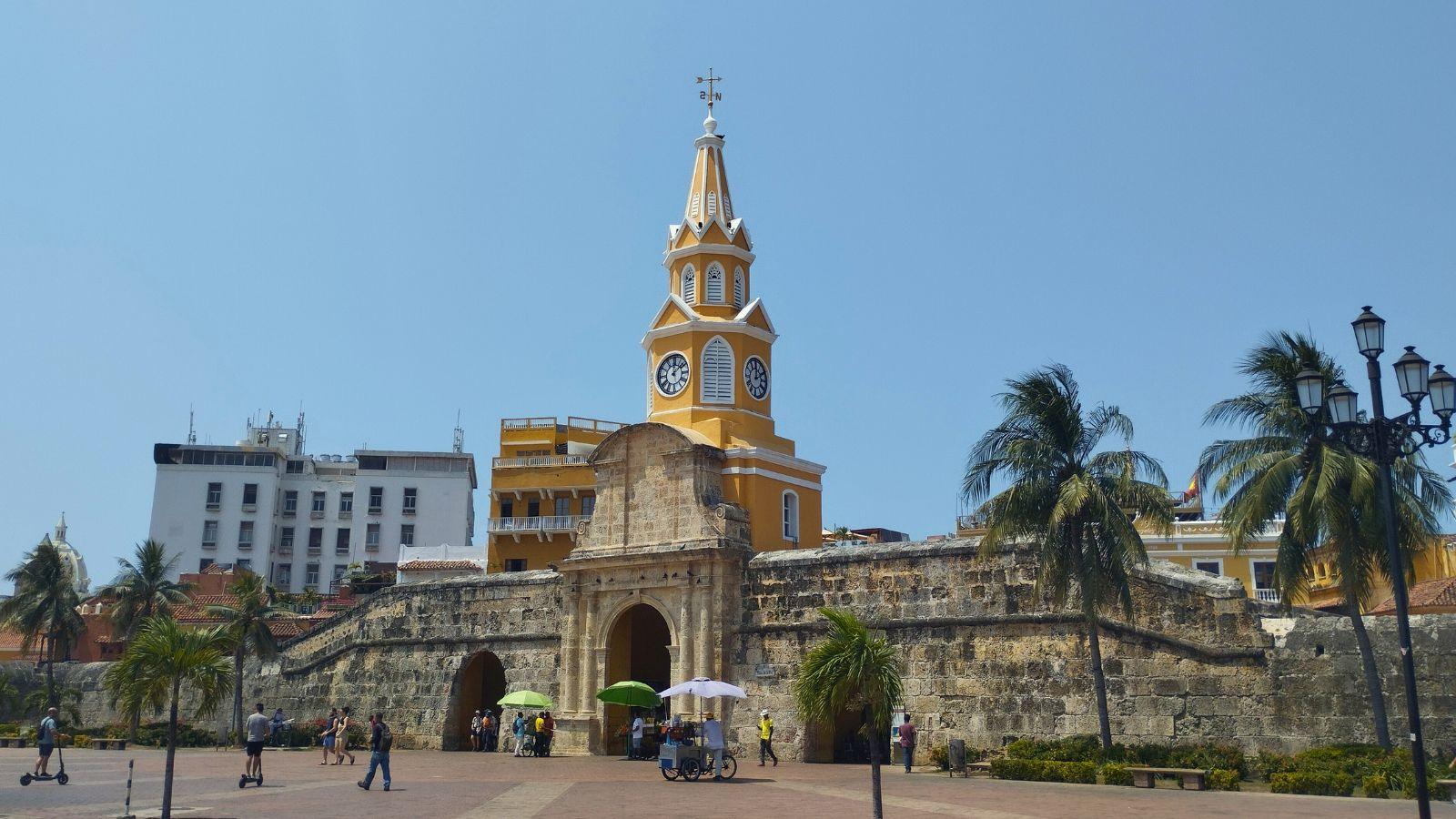
Cartagena sits on Colombia’s Caribbean coast and is one of the best-preserved colonial cities in the Americas. Its walled Old Town, fortresses and historic port are a UNESCO World Heritage Site, and its streets are lined with colorful houses, balconies covered in flowers and small plazas that come alive at night.
Beyond the walls, you have Getsemaní, a neighborhood full of street art and nightlife, and a group of islands with white sand and clear water less than an hour away by boat. This guide helps you plan your days, choose where to stay and decide which islands fit your trip.
Arriving in Cartagena
Rafael Núñez International Airport is only about 15 minutes by car from the Old Town. There are frequent flights from Bogotá and Medellín, and direct international flights from several cities in the United States, Central America and Panama.
From the airport, taxis are the easiest way to reach your hotel. Agree on the price or check the official rate at the taxi stand before you leave.

Cartagena in 2, 4 or 5 days
- 2 days: enough for the Old Town, Getsemaní and a sunset on the city walls
- 3 to 4 days: the ideal amount, with a full day on the islands
- 5 days or more: time for a second island trip, the mud volcano or San Basilio de Palenque
Exploring the Old Town
The Old Town, known locally as the Ciudad Amurallada, is surrounded by about 11 km of stone walls built to protect the city from pirates and foreign attacks. Inside, the best way to get to know it is on foot, without a fixed route.
Clock Tower and Plaza de los Coches
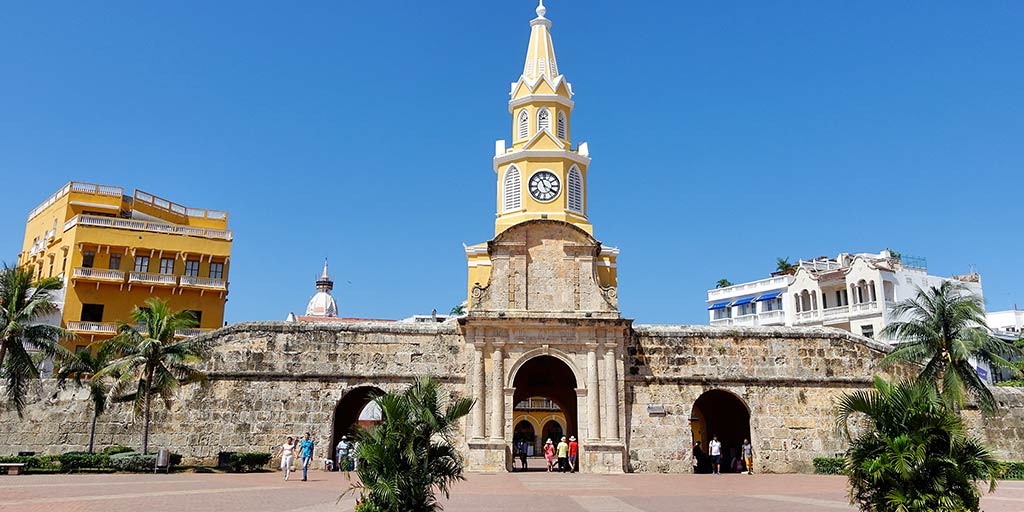
The Clock Tower is the main entrance to the walled city. Right behind it, Plaza de los Coches was once the site of the slave market, and today it is lined with arcades and sweet shops selling traditional coconut and tamarind candies.
Plaza Santo Domingo
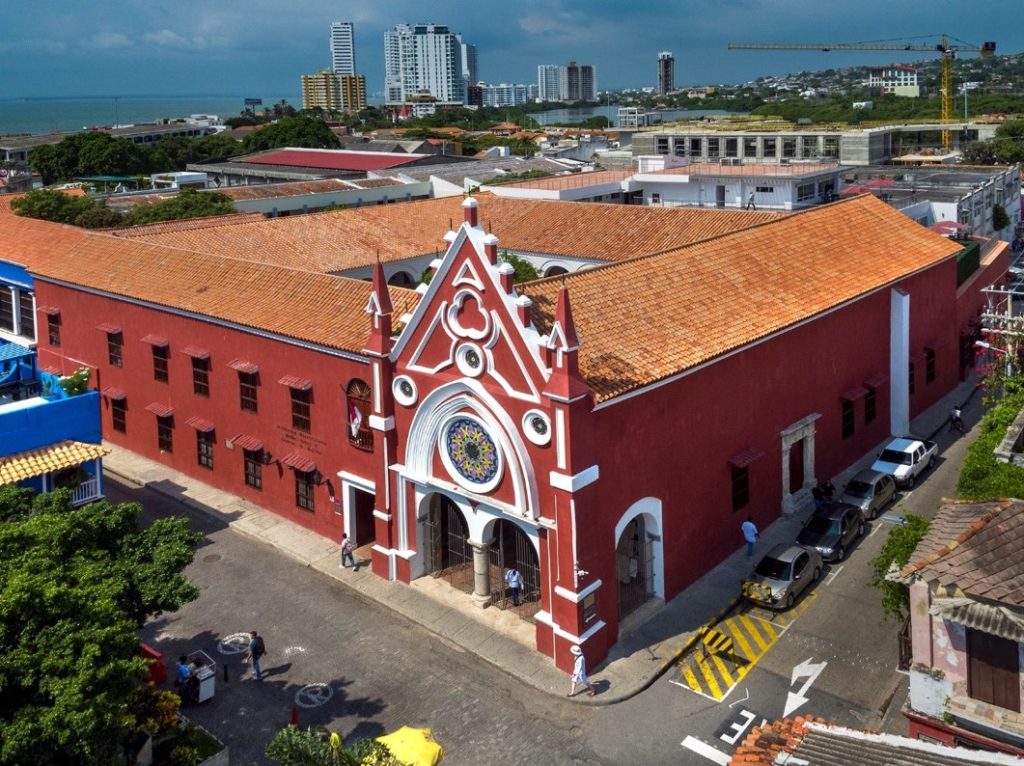
This is one of the liveliest plazas in the Old Town, with restaurant terraces and the Church of Santo Domingo, one of the oldest in the city. You will also find a reclining bronze figure by Colombian artist Fernando Botero, a popular photo stop.
San Pedro Claver Church and Cathedral
The Church of San Pedro Claver honors a Jesuit priest who dedicated his life to helping enslaved Africans arriving in the port. A few blocks away, the Cathedral of Santa Catalina de Alejandría stands out for its tall bell tower.
Walking on the walls
The walls are wide enough to walk along, and the stretch facing the sea is the best place to watch the sunset. Bars and cafés on top of the walls fill up at this time, so arrive a little early if you want a good spot.
San Diego
The northern part of the Old Town, San Diego, is quieter and more residential. It is home to Las Bóvedas, a row of old vaults now used as craft shops, and to several boutique hotels in restored colonial houses.
Getsemaní: street art and local life
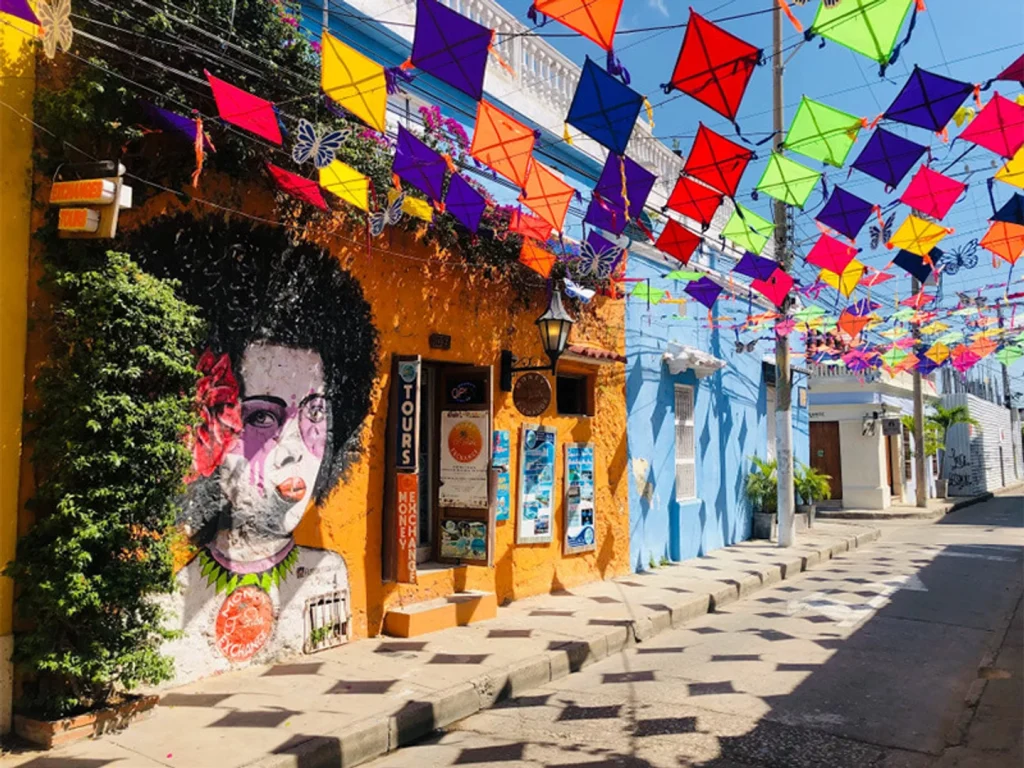
Getsemaní lies just outside the walls and was once a working-class neighborhood. Today it is the most vibrant part of Cartagena, while still keeping a local feel.
During the day, walk through its streets to see murals, umbrellas and flags hanging over the alleys. Calle del Pozo and Callejón Angosto are two of the most photographed corners.
At night, Plaza de la Trinidad becomes the center of neighborhood life, with street food, music and families sitting outside the church. It is also the best area for salsa bars and live music.
Castillo San Felipe de Barajas
This fortress, built on a hill near Getsemaní, was the largest military structure the Spanish built in their American colonies. You can walk through its tunnels, climb to the upper levels and see how the defense system worked. Go early in the morning, since there is little shade and the heat builds quickly.
Island trips from Cartagena
Rosario Islands
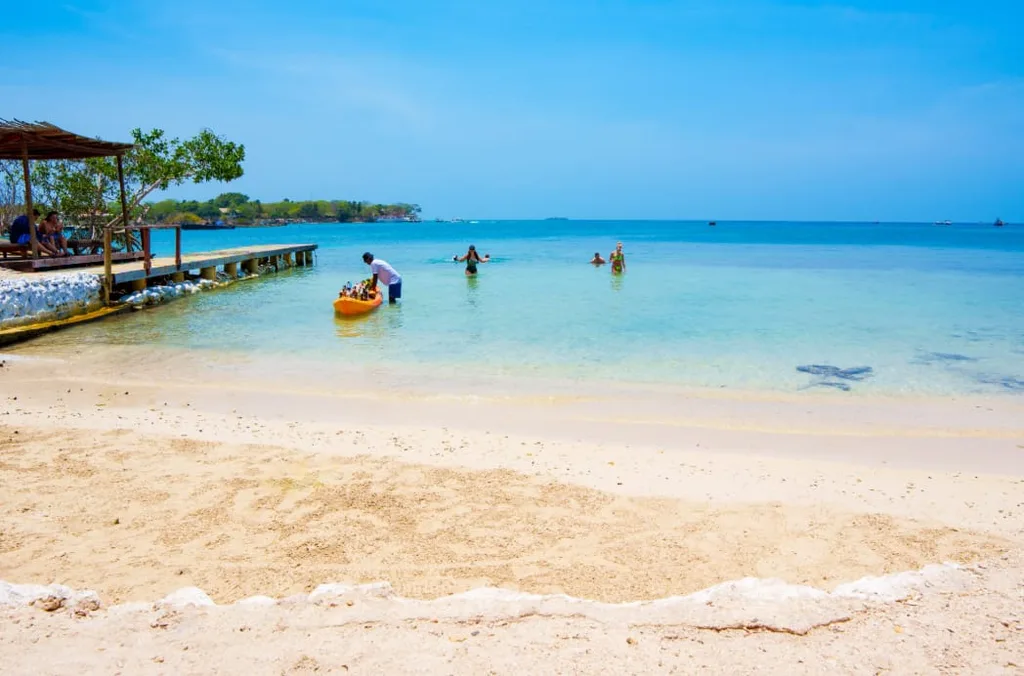
The Rosario Islands are part of a protected national park with coral reefs, mangroves and calm water. Boats leave from the La Bodeguita pier in the morning and take about one hour.
Most day trips combine a boat ride through the islands, time at a beach club and lunch with fried fish, coconut rice and plantains. Some tours include snorkeling or a visit to the oceanarium on one of the islands.
Barú and Playa Blanca
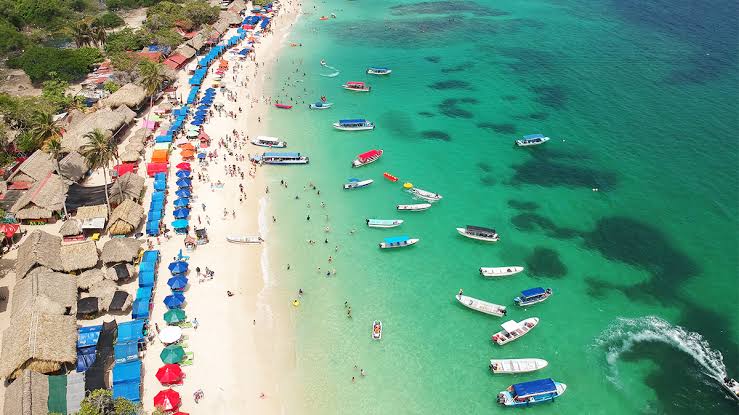
Barú is a peninsula south of Cartagena, and Playa Blanca is its most famous beach, with white sand and turquoise water. You can reach it by boat or by road, since a bridge connects it to the mainland.
Playa Blanca gets very crowded on weekends and holidays. For a quieter day, choose a beach club on Barú or visit on a weekday.
Tierra Bomba
Tierra Bomba is the closest island to the city, only 15 minutes by boat. It is a good option if you have half a day and want a beach without a long trip.
Tips for island days
- Boats leave from La Bodeguita pier, where you pay a port fee separate from the tour price.
- The sea can be rough, especially between December and March, when the wind is stronger.
- Bring cash, sunscreen and a waterproof bag for your phone and documents.
- Check what is included in your tour, since lunch, snorkeling gear and entrance fees vary.
Day trips beyond the city
Totumo Mud Volcano: a small volcano filled with warm mud, about one hour from Cartagena. You climb to the top, float in the mud and then rinse off in a nearby lagoon.
San Basilio de Palenque: founded by people who escaped slavery, it is considered the first free town in the Americas. Its language, music and traditions are recognized by UNESCO, and a visit with a local guide explains its history.
What to eat in Cartagena
Caribbean cooking in Cartagena is based on seafood, coconut and plantain. Try these dishes during your visit:
- Arepa de huevo: a fried corn arepa filled with egg, sold on the street
- Fried fish with coconut rice and patacones: the classic beach lunch
- Posta negra: beef cooked in a dark, sweet sauce, a local specialty
- Coconut lemonade: a creamy, cold drink that you will find everywhere
- Ceviche: served Caribbean style, often with a sweeter sauce than in Peru
Where to stay in Cartagena
| Area | Best for |
|---|---|
| Old Town | Staying inside the walls, boutique hotels and walking everywhere |
| San Diego | Quieter nights while staying close to the main sights |
| Getsemaní | Nightlife, street art and more affordable hotels |
| Bocagrande | Modern high-rise hotels and city beaches |
For a first visit, the Old Town or Getsemaní let you explore on foot and return to your hotel during the hottest hours.
Weather and seasons on the Caribbean coast
Cartagena is hot all year, with temperatures around 30 °C and high humidity.
December to April: the driest months and the peak season. The sea breeze helps with the heat, but hotels fill up, especially around Christmas, New Year and Easter.
May to November: more rain, usually in short afternoon showers. October and November are the wettest months. Prices are lower and there are fewer visitors.
Before you go: heat, vendors and cash
- Walk in the early morning and late afternoon, and rest or swim during the midday heat.
- Drink plenty of water and use sunscreen, even on cloudy days.
- Street vendors can be persistent. A polite and firm “no, gracias” is usually enough.
- The palenqueras, women in colorful dresses selling fruit, expect a tip if you take their photo.
- Carry some cash in Colombian pesos for taxis, street food and small shops.
Frequently asked questions about Cartagena
Is it better to stay in the Old Town or Getsemaní?
The Old Town is quieter and more elegant, while Getsemaní has more nightlife and lower prices. Both are within walking distance of each other.
Which island is best for a day trip from Cartagena?
The Rosario Islands offer the best combination of clear water, snorkeling and beach time. Playa Blanca is easier to reach but more crowded.
Do you need a tour to visit the Rosario Islands?
Most visitors go on a day tour from the La Bodeguita pier, which includes the boat and usually lunch. You can also book transport directly with a beach club if you prefer to spend the whole day in one place.
Can you swim at the beaches in Cartagena city?
Yes. Bocagrande has city beaches where you can swim, but the water is darker and the sand busier. For clear water, plan a day on the Rosario Islands or Barú.
Is Cartagena safe for tourists?
The Old Town, Getsemaní and Bocagrande are busy tourist areas. Use common sense, avoid showing valuables and take registered taxis at night.
Cartagena on your Colombia itinerary
Cartagena combines colonial history, Caribbean food and island days in one compact city. Whether you visit for a long weekend or as part of a longer trip through Colombia, MVP Experiences can plan a custom South America trip with your hotels, transfers and island tours arranged before you arrive.