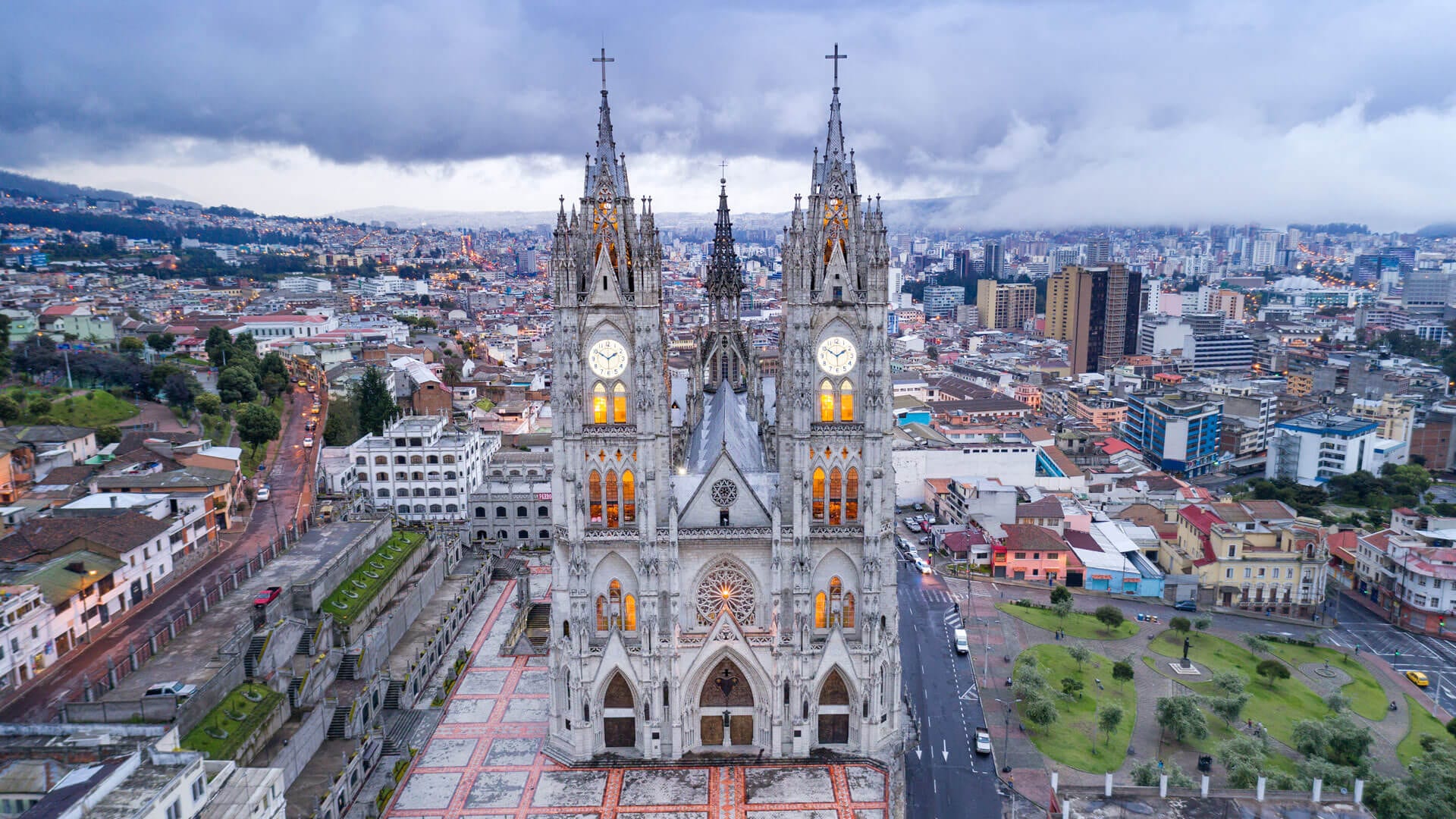
Ecuador is small enough to cross in a short flight, yet it holds three completely different worlds: a colonial capital in the Andes, one of the most biodiverse rainforests on the planet and the islands that inspired Darwin’s theory of evolution. Few countries let you combine mountains, jungle and ocean wildlife so easily in a single trip.
This guide explains the best order to visit Quito, the Amazon and the Galápagos, how many days to give each one and how the flights connect, so you can plan a route that flows without wasted time.
Why these three fit together
Each region shows you a different side of Ecuador:
- Quito: colonial churches, the equator line and cloud forests within a day trip
- The Amazon: rainforest walks, canoe trips through blackwater lagoons and Kichwa communities
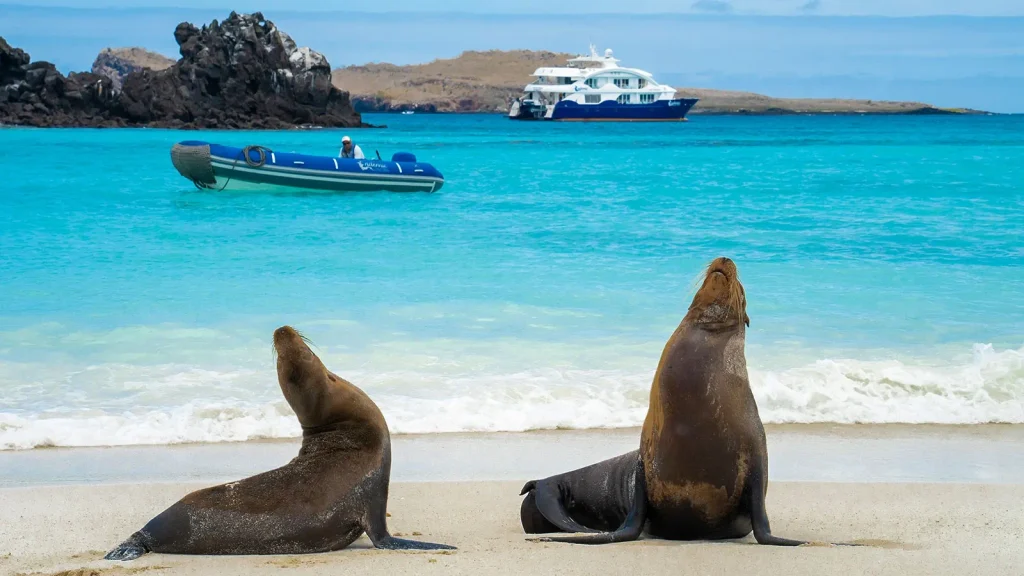
- Galápagos: sea lions, giant tortoises, marine iguanas and snorkeling with turtles and sharks
All flights to the Amazon leave from Quito, and all flights to the Galápagos leave from Quito or Guayaquil, so the route connects naturally.

The best order for your trip
The most practical order is Quito, the Amazon, then Galápagos.
Starting in Quito gives you time to recover from your international flight and get used to the altitude before the more active days. The Amazon comes next because flights leave from Quito. The Galápagos works best at the end: after early starts in the jungle, the islands give you beaches and slower days, and most return flights land in Guayaquil, which has good international connections.
Dividing your days
| Region | Minimum | Ideal |
|---|---|---|
| Quito and surroundings | 2 days | 3 days |
| Amazon | 3 days | 4 to 5 days |
| Galápagos | 3 days | 4 to 5 days |
With less than 10 days, choose two regions instead of rushing through all three. Travel days between regions take most of a morning, so count them in your plan.
A 12-day route through Ecuador
- Day 1: Arrive in Quito.
- Day 2: Colonial Quito and the Middle of the World monument.
- Day 3: Day trip to the Mindo cloud forest for waterfalls, birds and butterflies.
- Day 4: Fly to Coca and travel by river into the Yasuní region.
- Days 5 to 7: Rainforest hikes, canoe trips, a parrot clay lick and a visit to a local community.
- Day 8: Fly to Guayaquil and explore the Malecón and Las Peñas.
- Day 9: Fly to the Galápagos and see giant tortoises in the highlands of Santa Cruz.
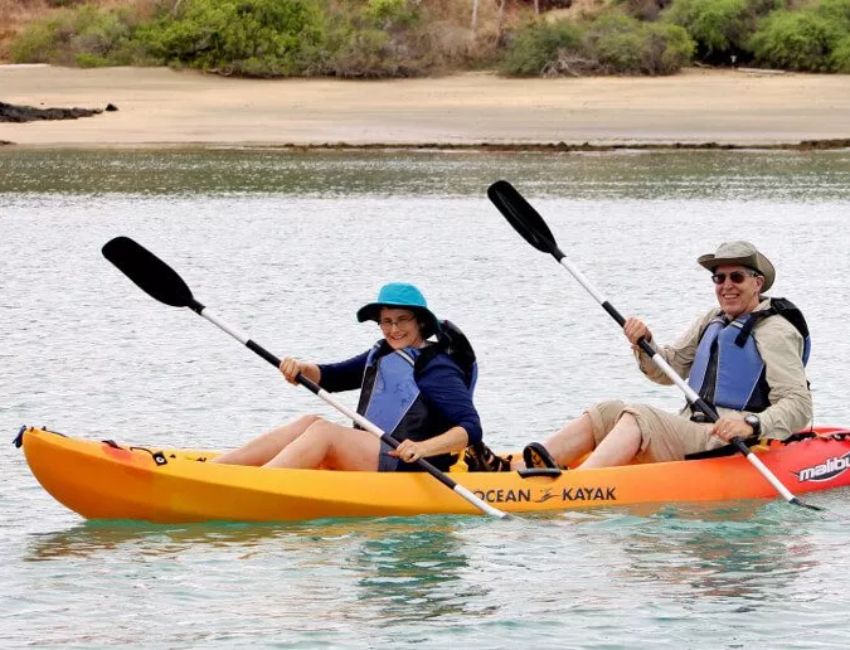
- Day 10: Speedboat to Isabela Island and an afternoon of kayaking or snorkeling.
- Day 11: Los Túneles excursion, with lava arches, penguins and sea turtles.
- Day 12: Fly back to the mainland.
This is the route of our 12-day Ecuador itinerary, which includes the Amazon river cruise, domestic flights and island transfers.
Shorter and longer versions
10 days: reduce Quito to two days and choose either Mindo or the city tour. Keep four days in the Amazon and four in the Galápagos.
14 days or more: add the Otavalo market and the lakes north of Quito, a day at Cotopaxi National Park, or a third island such as San Cristóbal.
Choosing your Amazon base
Ecuador’s Amazon has two main areas for visitors:
- Yasuní: reached through Coca, with deep forest, clay licks and high biodiversity. You can stay at a lodge or on a river cruise.
- Cuyabeno: reached through Lago Agrio, a reserve of flooded forest and lagoons, known for pink river dolphins and anacondas.
Lodges and river cruises both include meals, guides and daily excursions. A cruise gives you more comfort and covers more ground, while a lodge puts you deeper in the forest.
Galápagos by cruise or from the islands
You can explore the Galápagos in two ways:
- Island-based trips: you stay in hotels on inhabited islands like Santa Cruz and Isabela and take day excursions by boat. It is more flexible and usually more affordable.
- Cruises: you sleep on board and reach remote islands that day trips cannot visit. It is the best option for wildlife lovers with a larger budget.
On arrival, you pay the national park entrance fee, and your luggage goes through an inspection to protect the islands’ ecosystems.
Connecting flights inside Ecuador
- Quito to Coca or Lago Agrio: short flights of around 30 to 40 minutes
- Quito or Guayaquil to Galápagos: flights land at Baltra, next to Santa Cruz, or at San Cristóbal
- Galápagos to Guayaquil: the most common return, with connections to international flights
Book the Galápagos flights early, since they are limited and prices rise in high season.
Seasons in the Andes, jungle and islands
You can combine all three regions at any time of year, but each has its own pattern:
- Quito: drier from June to September, with more afternoon rain the rest of the year
- Amazon: rain falls all year, and the forest is always green
- Galápagos: from December to May, the water is warmer and the sea calmer; from June to November, the water is cooler, the sea rougher and marine life very active
Packing for three climates
- Warm layers and a light jacket for Quito
- Long sleeves, light trousers, a rain jacket and insect repellent for the Amazon
- Swimwear, reef-safe sunscreen, a hat and sandals for the Galápagos
- A small bag for canoe transfers, since space in the Amazon is limited
Your questions about Quito, the Amazon and Galápagos
What currency does Ecuador use?
The US dollar. Carry small bills, as change can be hard to find in the Amazon and on the islands.
Do you need a guide in the Galápagos?
Yes, for most national park sites. Visitors must be accompanied by a certified naturalist guide, which is included in organized tours and cruises.
Can you add Peru to this trip?
Yes. There are direct flights from Quito and Guayaquil to Lima, so you can continue to Cusco and Machu Picchu after the Galápagos.
Is the Amazon suitable for families?
Yes. Lodges and cruises offer easy walks and canoe trips adapted for children. Check recommended vaccines with a travel clinic before your trip.
Connect the Andes, jungle and islands with MVP Experiences
Quito, the Amazon and the Galápagos show you why Ecuador is one of the most diverse countries in the world. MVP Experiences organizes your domestic flights, river transfers, island boats and local guides, so you move from the Andes to the rainforest and the islands without worrying about connections.