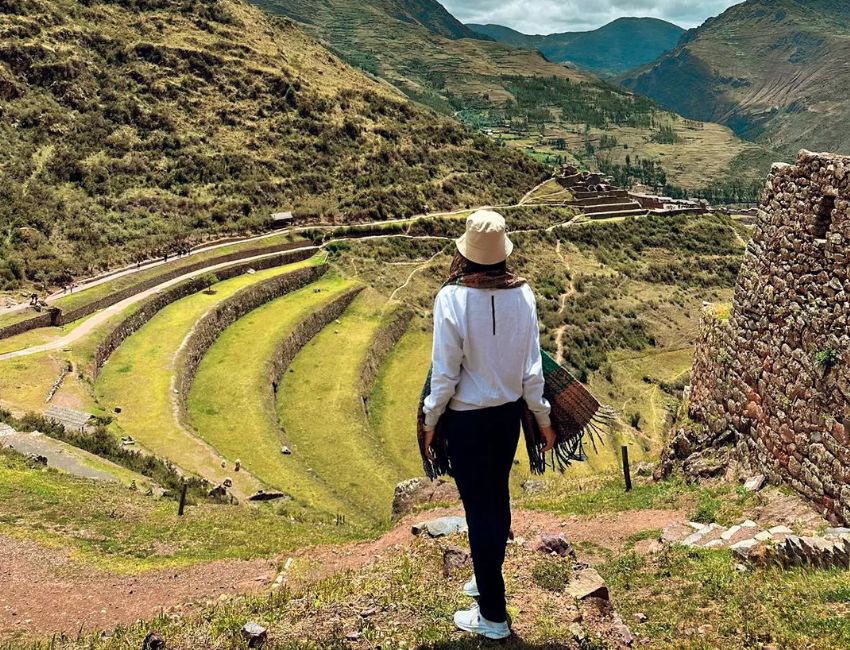
The Sacred Valley of the Incas stretches along the Urubamba River between Pisac and Ollantaytambo, less than two hours from Cusco. It was one of the most productive farming areas of the Inca Empire, and today you can walk through the same terraces, temples and villages that supplied the capital.
If you are planning a trip to Cusco, this guide shows you which places are worth your time, how to get there, how much the entrance tickets cost and how to organize your days so the valley fits naturally into your route to Machu Picchu.
Where is the Sacred Valley and why visit it
The valley lies north of Cusco and sits lower than the city, which makes it a good place to spend your first nights while you adjust to the altitude. Most towns are between 2,800 and 3,000 m a.s.l., compared with 3,399 m a.s.l. in Cusco.
You visit the Sacred Valley for three main reasons:
- Inca archaeological sites that are still in excellent condition
- Living Quechua communities where weaving and farming traditions continue
- A direct connection to the train stations that take you to Machu Picchu
How to get to the Sacred Valley from Cusco
You have three practical options, depending on your budget and how much time you want to spend at each stop.
Guided day tour. This is the most common choice. A Sacred Valley full day tour picks you up in Cusco, covers the main sites in one day and includes transport and a guide. It works well if you have limited time.
Private transport or taxi. Hiring a driver for the day gives you freedom to stop where you want and stay longer at the sites that interest you most.
Public transport. Shared vans (colectivos) leave Cusco for Pisac, Urubamba and Ollantaytambo throughout the day. It is the cheapest option, but you will need to plan connections between towns on your own.
Approximate travel times from Cusco:
| Destination | Distance | Driving time |
|---|---|---|
| Pisac | 33 km | 1 hour |
| Chinchero | 28 km | 45 minutes |
| Urubamba | 57 km | 1 hour 30 minutes |
| Ollantaytambo | 72 km | 1 hour 45 minutes |
Best places to visit in the Sacred Valley
Pisac: market and archaeological park
Pisac has two parts you should not confuse. Down in the town you will find the artisan market, where you can buy textiles, ceramics and silver jewelry. Up on the mountain is the archaeological park, with agricultural terraces, ceremonial buildings and one of the largest Inca cemeteries in the Andes.
Try to arrive early. The upper section of the site is quieter in the morning, and the light on the terraces is better for photos. If you plan to hike down from the ruins to the town, allow about 1.5 hours and wear shoes with good grip.

Chinchero: weaving tradition and colonial church
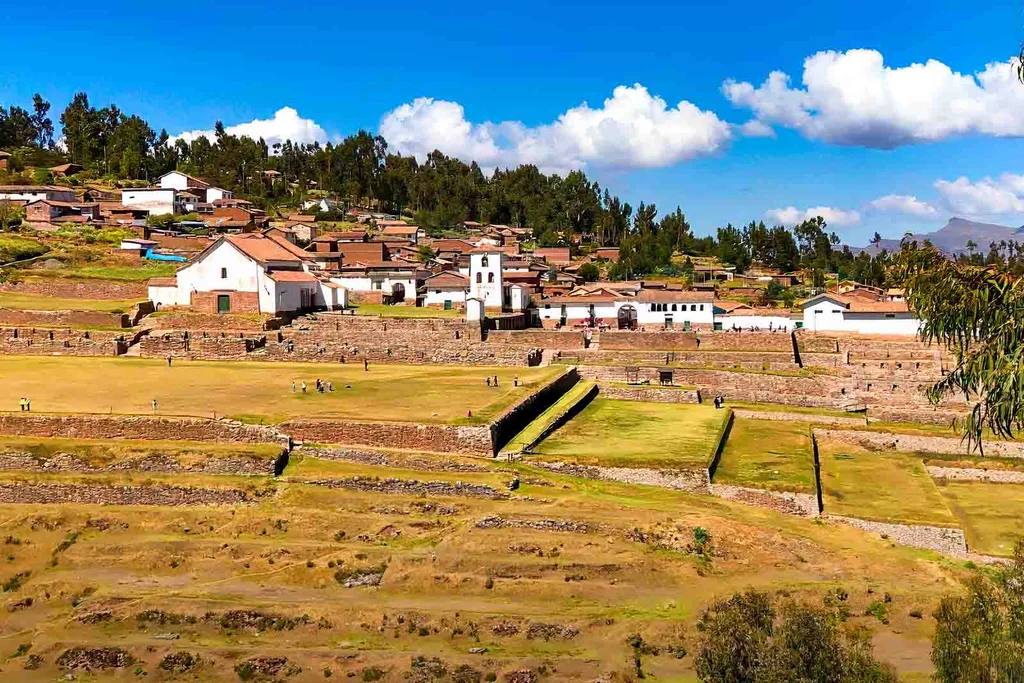
At 3,762 m a.s.l., Chinchero is the highest point on the usual Sacred Valley route. The town combines Inca walls and terraces with a colonial church built on top of an Inca palace.
What makes Chinchero special is its weaving cooperatives. Local women show you how they wash alpaca wool with natural roots and dye it with plants, minerals and cochineal. It is a short visit, but one of the most memorable if you are interested in Andean culture.
Moray: circular agricultural terraces
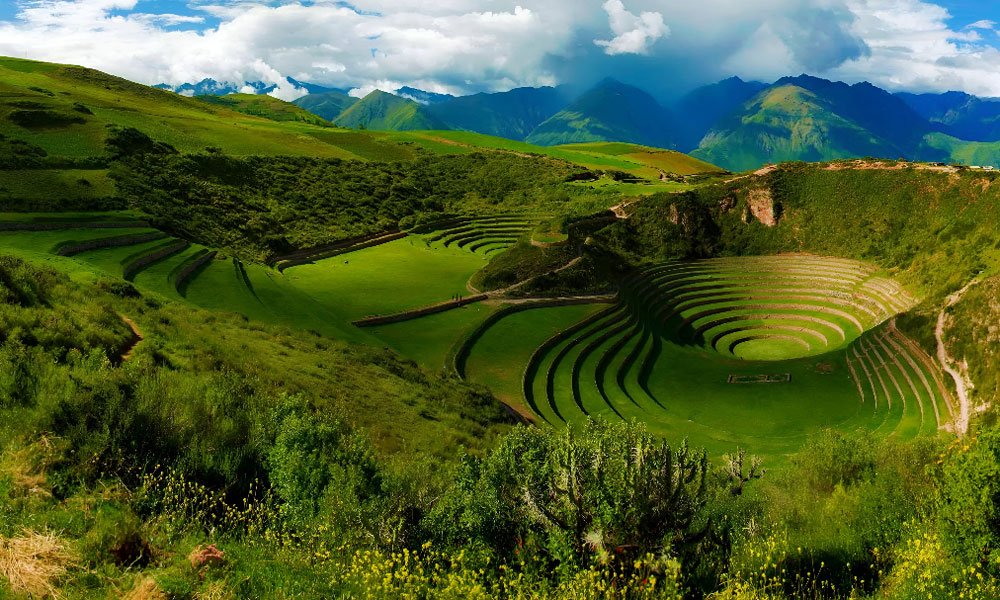
Moray is a group of concentric terraces built into natural depressions in the ground. The temperature changes from the top level to the bottom, and researchers believe the Incas used the site to test crops under different conditions.
You cannot walk down into the terraces, but the viewpoints around the main circle give you a complete view of the structure. Combine Moray with the Maras salt mines, since they are only a few kilometers apart.
Maras salt mines (Salineras de Maras)
The Salineras are thousands of salt pools on the side of a hill, fed by a salty spring that has been used since before the Incas. Local families still work the pools, and the salt is harvested mainly during the dry season.
From the viewpoint you can see how the pools change color depending on the season and the light. You can also buy pink salt and bath products at the small shops near the entrance, which supports the community that manages the site.

Ollantaytambo: the living Inca town
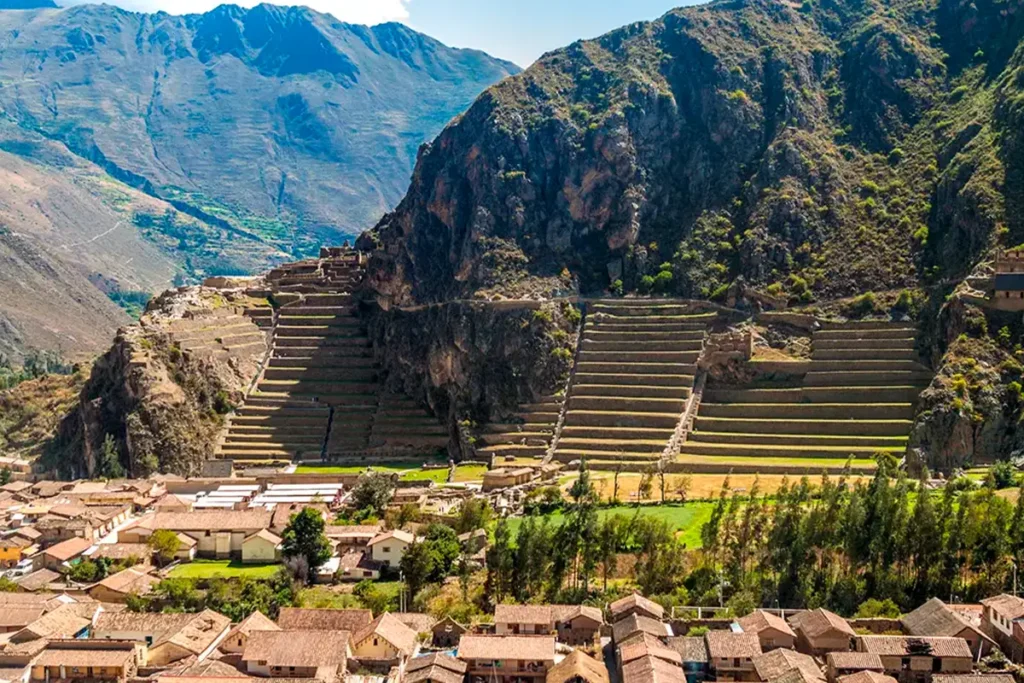
Ollantaytambo is the best example of an Inca town that is still inhabited. The streets follow the original layout, and water channels built centuries ago still run alongside the houses.
Above the town, the archaeological site includes steep terraces and the Temple of the Sun, made from large pink granite blocks brought from a quarry on the other side of the river. Ollantaytambo is also the main train station for Machu Picchu, so many travelers spend a night here before continuing to Aguas Calientes.
Other places worth your time
If you have an extra day, consider these less visited stops:
- Urubamba: the central town of the valley, with hotels, restaurants and easy access to all sites
- Huchuy Qosqo: an Inca site reached on foot, ideal if you like hiking and want to avoid crowds
- Yucay and Calca: quiet towns with colonial architecture and local markets
Cusco tourist ticket for the Sacred Valley
Most Sacred Valley sites are covered by the Boleto Turístico del Cusco (Cusco Tourist Ticket). You have two useful options:
- Integral ticket: includes sites in Cusco city and the Sacred Valley, valid for 10 days
- Partial ticket, circuit III: covers Pisac, Ollantaytambo, Chinchero and Moray, valid for 2 days
The Maras salt mines are not included in the tourist ticket and require a separate entrance fee paid at the site. Prices are updated periodically, so check the current rates before your trip or confirm with your tour operator.
Suggested Sacred Valley routes
One day route
Leave Cusco early and visit Chinchero, Moray and Maras in the morning. After lunch in Urubamba, continue to Ollantaytambo in the afternoon. If you prefer to include Pisac, it replaces Moray and Maras, since covering all six stops in one day is too rushed.
This is the route most Sacred Valley tours from Cusco follow, sometimes known as the VIP route.
Two day route
Day 1: Pisac (ruins and market), lunch in Urubamba and afternoon in Ollantaytambo. Spend the night in the valley.
Day 2: Moray, Maras and Chinchero on the way back to Cusco, or take the train from Ollantaytambo toward Machu Picchu.
With two days you avoid long hours in the van and have time to walk each site calmly.
Altitude and best time to visit
The Sacred Valley is lower and warmer than Cusco, so you will probably feel better here in your first days. Drink water, eat light meals and avoid intense activity on arrival day. For more advice, read our guide to altitude sickness in Cusco.
The dry season, from May to October, offers clear skies and the best conditions for photos. The rainy season, from November to March, brings greener landscapes and fewer visitors, but paths can be muddy and afternoon rain is common.
Where to stay in the Sacred Valley
- Urubamba: a good base in the center of the valley, with hotels for all budgets
- Ollantaytambo: ideal if you are taking an early train to Machu Picchu
- Pisac: quieter, with small lodges and wellness retreats
Sacred Valley and Machu Picchu in the same trip
Many travelers combine the valley with Machu Picchu instead of returning to Cusco. You tour the Sacred Valley, sleep in Ollantaytambo or Urubamba and take the train to Aguas Calientes the next morning. This saves you several hours of travel and lets you arrive at Machu Picchu rested.
You can book this combination as a Sacred Valley and Machu Picchu 2 day tour, which includes transport, trains and entrance tickets.

Frequently asked questions about the Sacred Valley
How many days do you need in the Sacred Valley?
One full day is enough to see the main sites. Two days let you visit Pisac, Chinchero, Moray, Maras and Ollantaytambo without rushing.
Is the Sacred Valley worth visiting?
Yes. It gives you a wider view of Inca history than Machu Picchu alone, and it helps you acclimatize before visiting higher places.
Can you visit the Sacred Valley without a tour?
Yes. You can use colectivos or hire a private driver, but you will need to buy the tourist ticket and plan the route between sites yourself.
Is the Maras salt mine included in the tourist ticket?
No. The Maras salt mines have a separate entrance fee that you pay on arrival.
What should you bring to the Sacred Valley?
Bring sunscreen, a hat, a rain jacket, comfortable walking shoes, water and cash in soles for entrance fees, markets and small purchases.
Plan your Sacred Valley trip With MVP Experiences
The Sacred Valley is the best way to understand how the Incas lived, farmed and built beyond Cusco. Whether you choose a one day tour or a longer route that ends at Machu Picchu, our local team can organize transport, guides and tickets for you. Explore our Sacred Valley tours and choose the option that fits your time and budget.