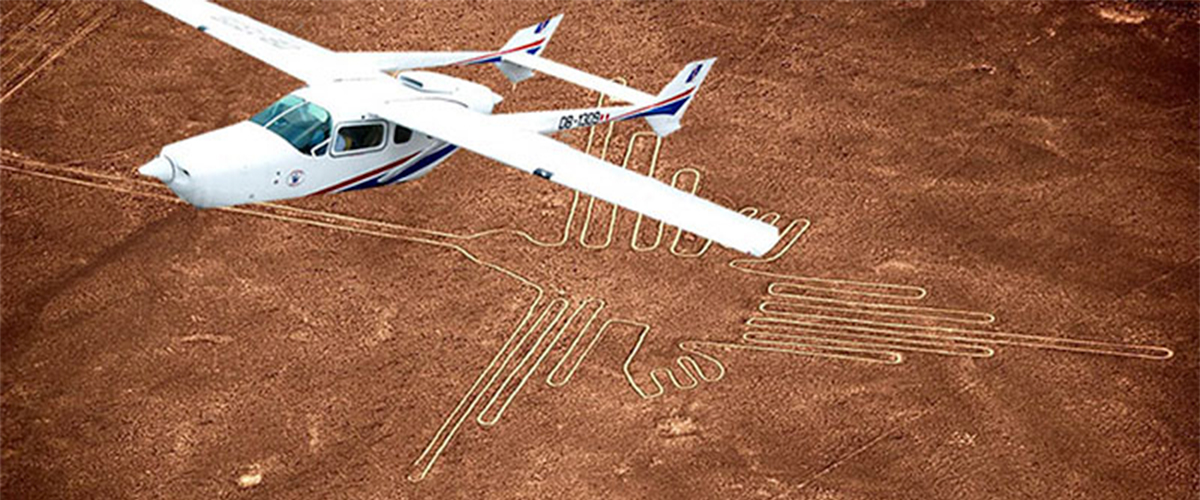
The Nazca Lines are one of the few archaeological sites you really need to see from above. Stretched across the desert of southern Peru, these giant drawings only make sense at a certain height, which is why a short flight over the plains is the main way to experience them. This guide explains how the overflight works, which airport to choose, what you will see from the window and how to keep your stomach steady during the turns.
What the Nazca Lines Are and Who Made Them
The lines are geoglyphs spread over roughly 450 square kilometers of the Nazca and Palpa plains, in the Ica region. Most were created by the Nazca culture between about 500 BC and 500 AD, and UNESCO added them to its World Heritage List in 1994.
How the geoglyphs were drawn in the desert
The ground here is covered by reddish stones darkened by iron oxide. The Nazca people removed that top layer to expose the lighter soil underneath, creating lines that contrast clearly with the surface. Almost no rain, little wind at ground level and a stable climate have kept them visible for around two thousand years.
Theories about their purpose
No single explanation has been proven. German researcher Maria Reiche, who studied the lines for decades, linked many of them to astronomical events and a farming calendar. Other researchers connect them to water rituals in a place where water was scarce, or see them as ceremonial paths meant to be walked. Most experts agree they were made to be seen by the gods rather than by people.
Figures You Will Spot from the Air
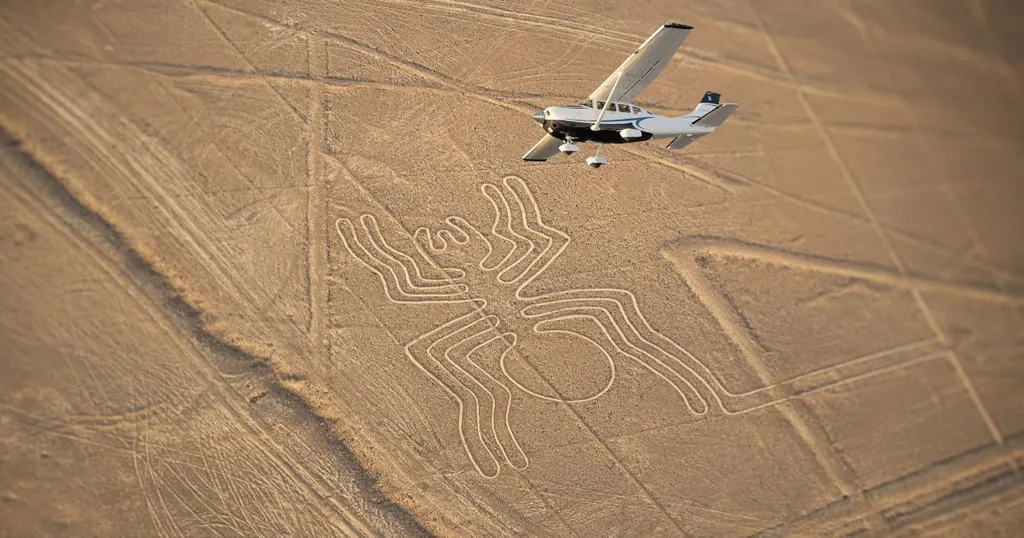
A standard flight covers around 12 to 15 figures, along with straight lines, triangles and trapezoids that run for kilometers.
The hummingbird, monkey and spider
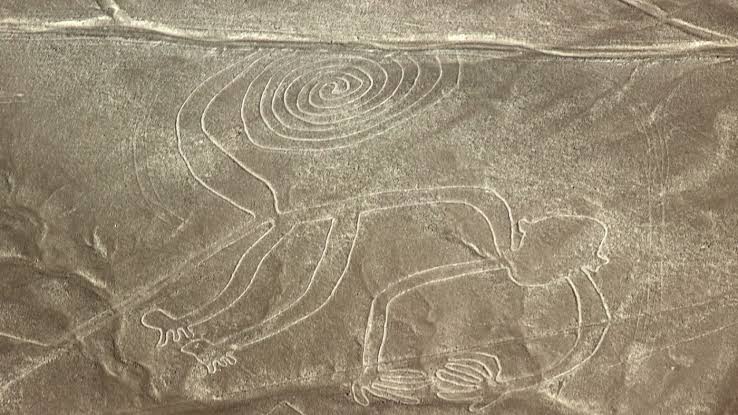
The hummingbird, close to 100 m long, is the most recognizable image and usually the one people remember. The monkey stands out for its spiral tail, and the spider is smaller but very detailed. You will also see the whale, the condor, the dog, the parrot and the heron with its long zigzag neck.
The astronaut on the hillside
Unlike most figures, the “astronaut” is carved on a slope rather than the flat plain. It shows a round-headed figure with one arm raised, and its nickname has fueled plenty of alien theories. Archaeologists usually interpret it as an owl-man or a fisherman.
Choosing Your Departure Airport
Flying from Nazca
The María Reiche aerodrome, just outside the town of Nazca, is the most common departure point. The flight lasts about 30 to 35 minutes and is the most affordable option. It works well if you are already traveling along the Panamericana between Lima and Arequipa or staying overnight in Nazca.
Flying from Pisco or Ica
Some operators fly from Pisco, near Paracas, or from Ica. The total time in the air is longer, around 1.5 to 2 hours, because of the distance to the plains, and the price is higher. The advantage is that you can combine the flight with Paracas and Huacachina without spending a night in Nazca.
Inside the Cessna: How the Overflight Works
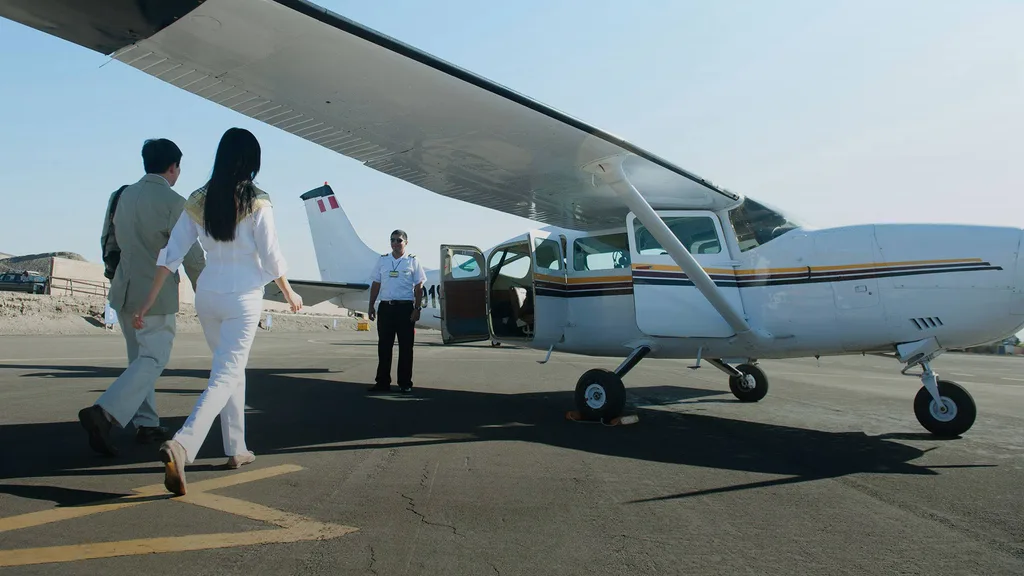
Check-in at the aerodrome
Plan to arrive about an hour before your slot. Staff will check your passport, collect the airport fee and weigh each passenger so the pilot can balance the plane. Seats are assigned by weight, not by preference, so couples are not always seated together.
What to bring to the counter
Carry your original passport, cash in soles for the airport tax and your booking confirmation. A phone or camera with a wrist strap is useful, since you will be holding it while the plane tilts.
Banking turns and what they feel like
The small planes carry between 4 and 12 passengers. Over each figure, the pilot tips the wings sharply to one side and then circles to repeat the view for the other side of the cabin. The co-pilot announces each figure and points to it. The movement is constant, which is the part that catches most people off guard.
How to Avoid Motion Sickness in a Small Plane
If you are sensitive to motion, take motion sickness medication about an hour before boarding. Eat a light breakfast instead of flying on an empty or very full stomach. During the flight, look at the horizon between figures, keep your camera down for part of the time and breathe slowly. Many travelers enjoy the flight more when they take a few photos and then simply watch.
Best Hours of the Day to Fly
Morning flights, from around 7:00 to 10:00 a.m., usually have calmer air and clearer views. After midday, heat creates more turbulence and haze over the desert. Flights run year-round because the area stays dry, but departures can be delayed by morning fog or strong winds, so avoid booking the flight with a tight connection afterward.
Seeing the Lines Without Boarding a Plane
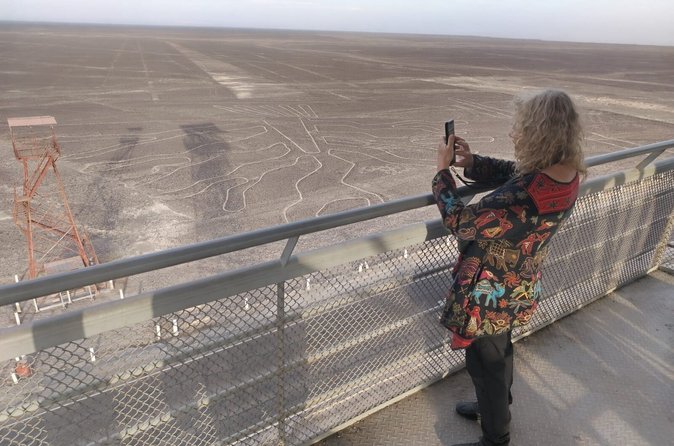
If you prefer not to fly, the observation tower on the Panamericana, about 20 km north of Nazca, lets you see the hands and the tree from about 13 m high for a small fee. Nearby, a natural viewpoint gives a wider look at several lines. The Palpa lines, closer to Ica, include human figures on hillsides that are easier to view from ground level. Neither option replaces the flight, but both give you context.
Other Sites Near Nazca Worth an Extra Half Day
The Chauchilla cemetery shows pre-Inca mummies still wrapped in textiles, exposed in open tombs in the desert. The Cantalloc aqueducts, with their spiral stone openings, are still used to irrigate fields today. In town, the Maria Reiche museum and the planetarium help you understand the research behind the lines. These visits pair well with the flight, and you can find more ideas across the country in our guide to things to do in Peru.
Adding Nazca to a Southern Peru Route
Nazca fits naturally on the road between the coast and the southern Andes. A common route goes from Lima to Paracas, flies over the lines, and continues to Arequipa before heading up to Puno and Cusco, which also helps you gain altitude gradually. If you want this order planned for you, our tour covering southern Peru in 12 days includes Nazca along with Arequipa, Lake Titicaca and Machu Picchu.
Frequently Asked Questions
Are Nazca Lines flights safe?
Flights are regulated by Peru’s Ministry of Transport, and operators must meet safety inspections. Book with established companies, avoid unusually cheap offers and check that the price includes insurance.
Is there an airport fee at Nazca?
Yes. The aerodrome charges a separate tax that is usually not included in the flight price and is paid in cash at check-in.
Can children or older travelers take the flight?
Children usually need to be accompanied by an adult, and there is no upper age limit. Travelers with heart conditions, recent surgery or pregnancy should consult a doctor first.
How many figures can you see on the flight?
Most flights show around 12 to 15 figures plus geometric shapes. The exact number depends on the route the operator follows.
Is it better to sit on the left or right side?
It does not matter much. Pilots bank both ways over each figure so everyone gets a clear look.
Can the flight be canceled because of weather?
Fog in the early morning or strong winds can delay or cancel departures. Operators usually reschedule for later the same day or offer a refund.