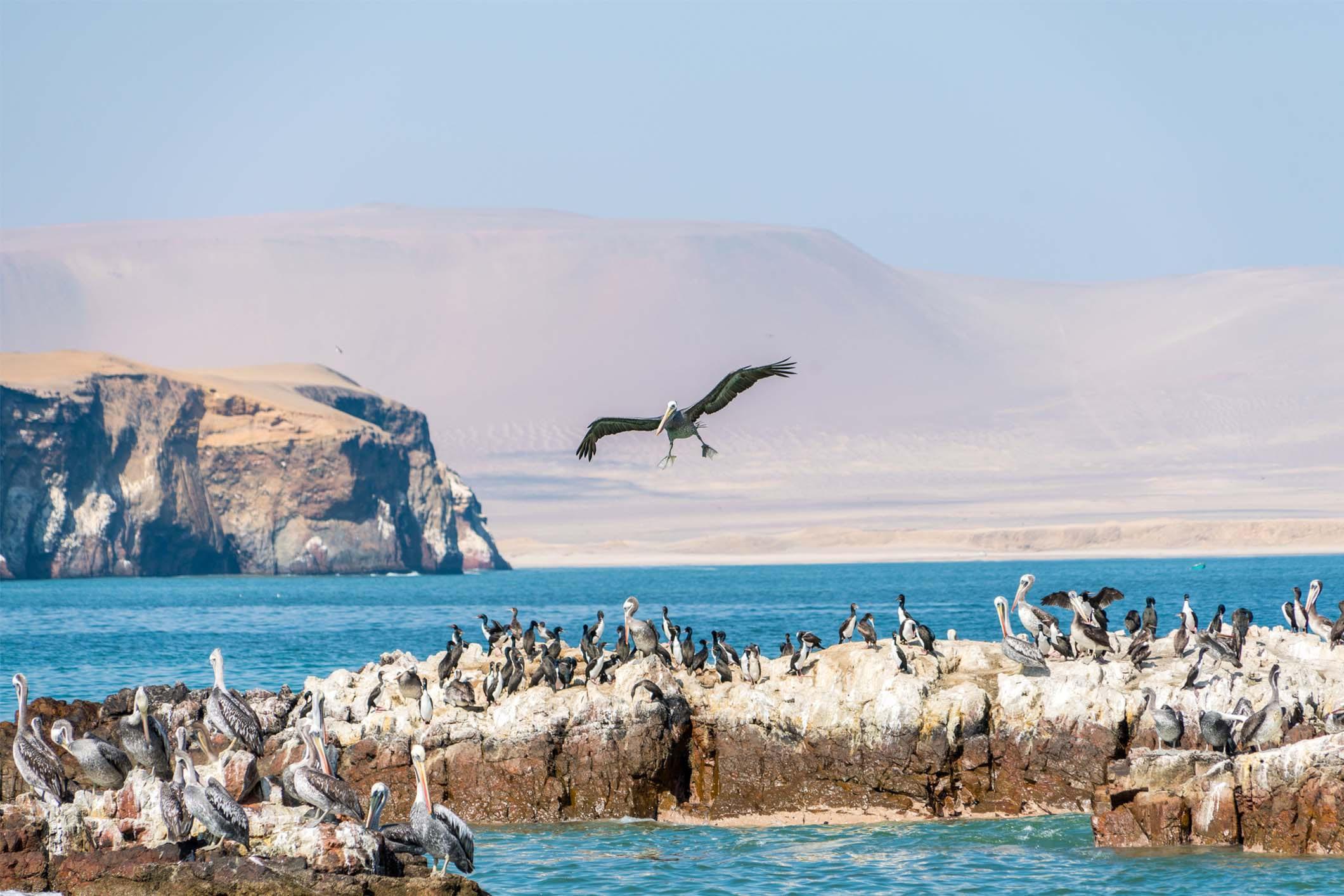
Paracas is where the Peruvian desert meets the Pacific. A few hours south of Lima, you trade city traffic for red cliffs, quiet bays and islands crowded with sea lions and seabirds. It is also one of the easiest places to add some coast to a trip otherwise focused on the Andes. This guide explains how to get there, what the Ballestas boat tour includes, what to see on land and how much time to plan.
Getting from Lima to Paracas
Paracas is about 250 km south of Lima. Most travelers stay near El Chaco, the small town beside the pier, or in one of the resorts along the bay.
By bus along the Panamericana
Several bus companies run comfortable direct services from Lima to Paracas, with reclining seats and onboard service. The trip takes around 3.5 to 4 hours, depending on traffic leaving the city. Morning departures let you arrive in time for lunch and an afternoon in the reserve. If you have an extra day in the capital before leaving, our Lima food guide will help you make the most of it.
Private transfer and stops on the way
A private transfer gives you more flexibility and the option to stop along the coast. Popular breaks include Chincha, known for its Afro-Peruvian music and culture, and the fishing villages south of Lima where you can have ceviche by the sea.
The Ballestas Islands Boat Tour
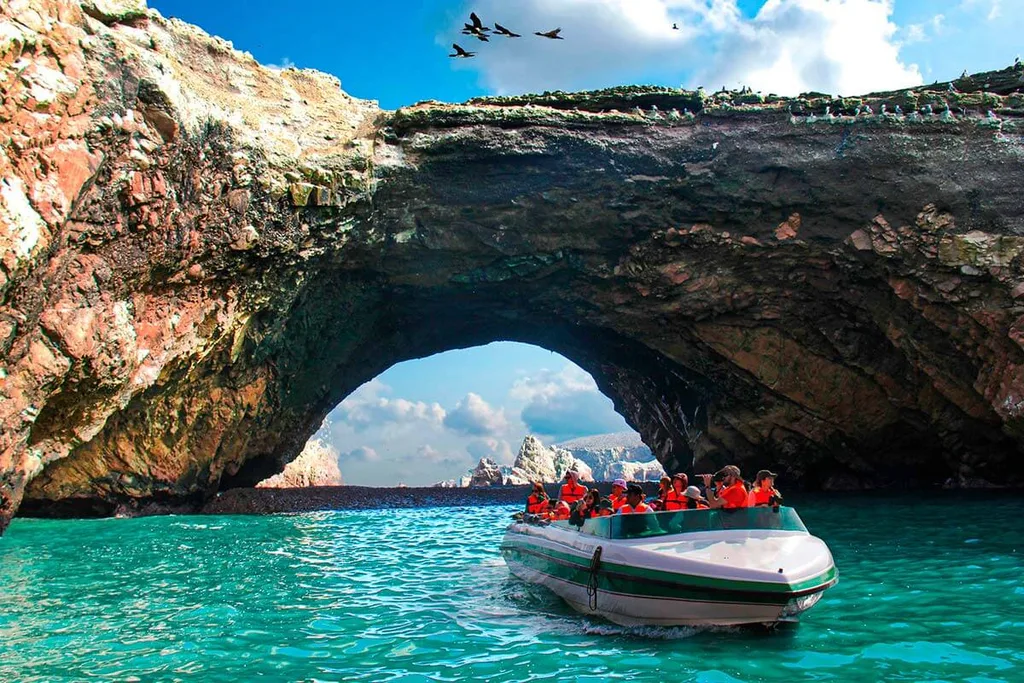
The Ballestas Islands are often called the “poor man’s Galápagos” because of the amount of wildlife packed onto a few rocky islands. The boat tour lasts about 2 hours and usually leaves from the El Chaco pier in the morning.
The Candelabra geoglyph
On the way out, boats stop in front of the Candelabra, a large figure carved into a sandy hillside on the Paracas peninsula. It is about 180 m tall and visible from far out at sea. Its origin is still debated: some link it to the Paracas culture, while others believe it served as a guide for sailors.
Sea lions, penguins and seabirds
Around the islands, boats slow down near arches and caves where South American sea lions rest on the rocks. You will also see Humboldt penguins, Peruvian boobies, guanay cormorants, pelicans and Inca terns with their white mustache feathers. With some luck, dolphins follow the boat for a while.
Why landing on the islands is not allowed
The islands are a protected area inside the Paracas system, and only authorized workers can go ashore. Every several years, guano is collected by hand and used as natural fertilizer, which is why you will see old wooden piers and buildings on the rocks.
Tips for the boat ride
The boats are open and move fast, so wear a windbreaker and a hat you can secure. Seats on the sides give better views, and the right or left side depends on the route of the day. The smell of guano is strong near the islands, and it is part of the experience.
Paracas National Reserve by Land
The Paracas National Reserve, created in 1975, protects around 335,000 hectares of desert and sea. Most tours visit it in the afternoon by car, following a circuit of viewpoints.
Playa Roja and the cliffs
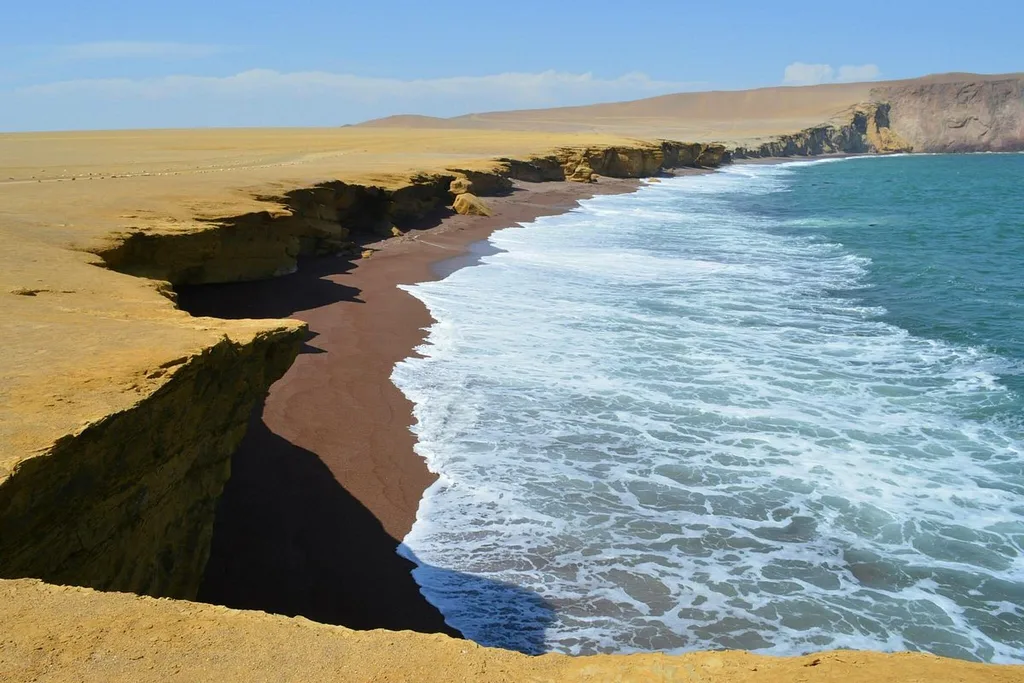
Playa Roja is a beach with deep red sand, made from volcanic rock ground down by waves. The viewpoints above it show the contrast between the red shore, the yellow desert and the blue ocean. Nearby, you can still see the base of La Catedral, a rock arch that collapsed during the 2007 earthquake.
Lagunillas and a seafood lunch
Lagunillas is a small fishing cove inside the reserve with a handful of simple restaurants. The fish is caught the same morning, so it is a good place to order ceviche, fried fish or a seafood rice while boats rest in the bay.
Flamingos in Paracas Bay
The Chilean flamingo arrives in Paracas Bay mostly during the southern winter. They stay at a distance from the shore, so binoculars or a zoom lens make a big difference.
The Paracas Culture and Its Textiles
Long before the Incas, the Paracas culture lived on this coast, roughly between 800 BC and 100 AD. They are known for their elaborate burial mantles, woven with complex figures and bright colors that survived thanks to the dry desert. They also practiced skull modification, shaping the heads of infants as a sign of status. The Julio C. Tello site museum inside the reserve explains their history and shows pieces found in the area.
Huacachina: Dunes and Sandboarding an Hour Away
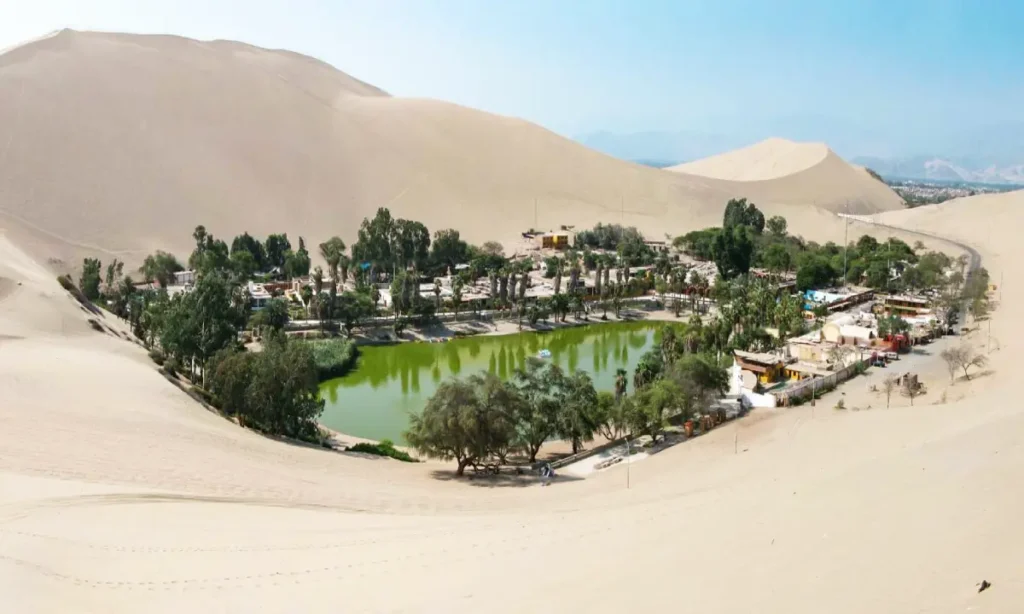
About an hour south of Paracas, Huacachina is a small oasis surrounded by some of the highest sand dunes in South America. The classic activity is a dune buggy ride followed by sandboarding on the slopes. Go in the late afternoon for softer light and a sunset over the dunes. The buggy rides are fast and bumpy, so they are not ideal for travelers with back problems.
Pisco and Wine Bodegas in Ica
The Ica valley is the heart of Peru’s pisco and wine production. Visiting a bodega lets you see how grapes are pressed and distilled, and taste the different types of pisco. Some bodegas are large and modern, while others still use traditional clay jars and stone presses. A tasting fits well between the morning boat tour and an afternoon in Huacachina.
Sun, Fog and Wind on the Coast
Paracas has little rain throughout the year. From December to April it is hot and sunny, the high season for beaches. From June to September the mornings are often overcast and cooler, although boats still run. In any season, a strong afternoon wind known locally as the paracas picks up sand, so plan outdoor activities in the morning. The port authority can cancel boat departures when the sea is rough, so avoid leaving the tour for your last morning.
How Much Time to Give Paracas
One night is enough for the Ballestas Islands and a quick look at the reserve. Two nights let you add Huacachina and a bodega without rushing, and give you a slower day by the sea. If you are continuing south to Nazca, Paracas works as the first stop on the way.
Building Paracas into Your First Week in Peru
Starting your trip on the coast gives you a relaxed introduction to Peru before flying up to Cusco. You also avoid arriving at high altitude on your first day. If you want a short route that covers the coast and the Andes, our 7-day Peru tour combines Lima, Paracas, Cusco and Machu Picchu in one week.
Frequently Asked Questions
Can you swim at the beaches in Paracas?
Some beaches, like Yumaque and those near El Chaco, allow swimming in calm conditions. The water is cold for most of the year because of the Humboldt Current, and some beaches inside the reserve have strong currents.
Is the Ballestas boat ride suitable for people who get seasick?
The ride is fairly short, and the sea is usually calm in the morning. If you are sensitive, take medication before boarding and sit toward the back of the boat.
Are there fees to enter the Paracas reserve and the islands?
Yes. Visitors pay a small dock fee and a reserve fee, usually in cash and not always included in the tour price.
Is Paracas a good destination for families?
Yes. The boat tour, the beaches and the calm bay make it an easy stop for families, while Huacachina adds some adventure for older children.
Can I do Paracas as a day trip from Lima?
It is possible, but it means leaving very early and spending around 8 hours on the road. Staying at least one night lets you enjoy the islands without rushing.
What is the best way to photograph the wildlife?
Bring a camera with a good zoom and a strap, since boats keep a distance from the rocks. Morning light also works better than the hazy afternoon.