Peru celebrates something almost every week of the year. Some festivals fill entire cities with dancers, bands and processions, while others take place in remote mountain valleys far from any road. Timing your trip around one of them adds color and meaning to your visit, but it also affects prices and availability. This calendar walks you through the main celebrations month by month, with tips to enjoy them respectfully.
How Religious and Andean Traditions Blend in Peruvian Festivals
Most Peruvian festivals combine Catholic celebrations brought by the Spanish with older Andean beliefs. A procession for a patron saint may include offerings to Pachamama, Mother Earth, and dancers whose costumes represent colonial characters, animals or spirits of the mountains. Understanding this mix helps you see festivals as living traditions rather than performances for visitors.
January to March: Carnival Season and the Candelaria
Virgen de la Candelaria in Puno
In February, Puno hosts one of the largest festivals in South America in honor of the Virgin of Candelaria. For about two weeks, tens of thousands of dancers and musicians fill the streets and the stadium with elaborate costumes, masks and brass bands. The festival is recognized by UNESCO as Intangible Cultural Heritage. If you plan to attend, combine it with the islands and the shores described in our Lake Titicaca guide.

Carnival in the Andes
Carnival is celebrated across the Andes in February or March, depending on the date of Easter. Expect water balloons, foam and colorful powder in the streets, especially on weekends. A central tradition is the yunza, where people dance around a tree decorated with gifts and take turns cutting it with an axe until it falls. Cajamarca, in the north, is known for the biggest Carnival celebration in the country.
Grape harvest in Ica
In early March, Ica celebrates the grape harvest with a festival that includes parades, music and grape stomping in the traditional way. It is a good time to visit the pisco bodegas in the valley.
April and May: Holy Week and Pilgrimages
Semana Santa in Ayacucho and Cusco
Holy Week, in March or April, is especially intense in Ayacucho, where processions, flower carpets and night ceremonies fill the city for several days. In Cusco, the Lord of the Earthquakes, the patron of the city, is carried through the streets on Holy Monday, covered in red ñucchu flowers.
Qoyllur Rit’i
Qoyllur Rit’i is a pilgrimage to the Sinakara valley, near Ausangate mountain, held weeks before Corpus Christi. Thousands of pilgrims walk to a sanctuary above 4,700 m a.s.l., with dancers representing different communities. It is one of the most important Andean celebrations and requires good physical condition, warm gear and a local guide familiar with the event.
June: Cusco’s Festival Month
June is the busiest festival month in Cusco, with celebrations almost every day, school parades and dances in the Plaza de Armas.
Corpus Christi
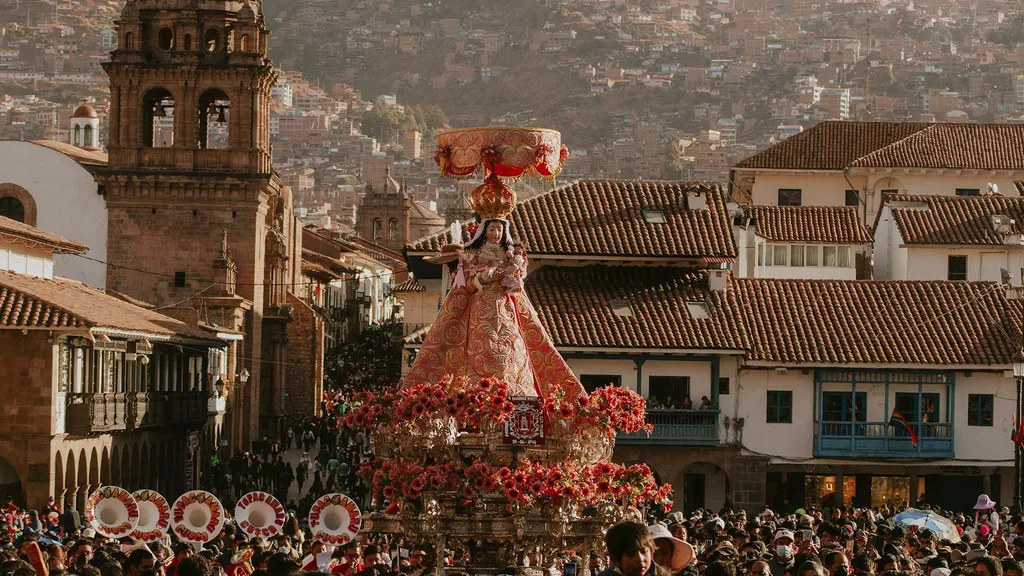
About 60 days after Easter, the images of saints and virgins from different Cusco parishes are brought to the Cathedral and paraded around the main square. It is the occasion when families prepare chiriuchu, the city’s traditional cold platter.
Inti Raymi
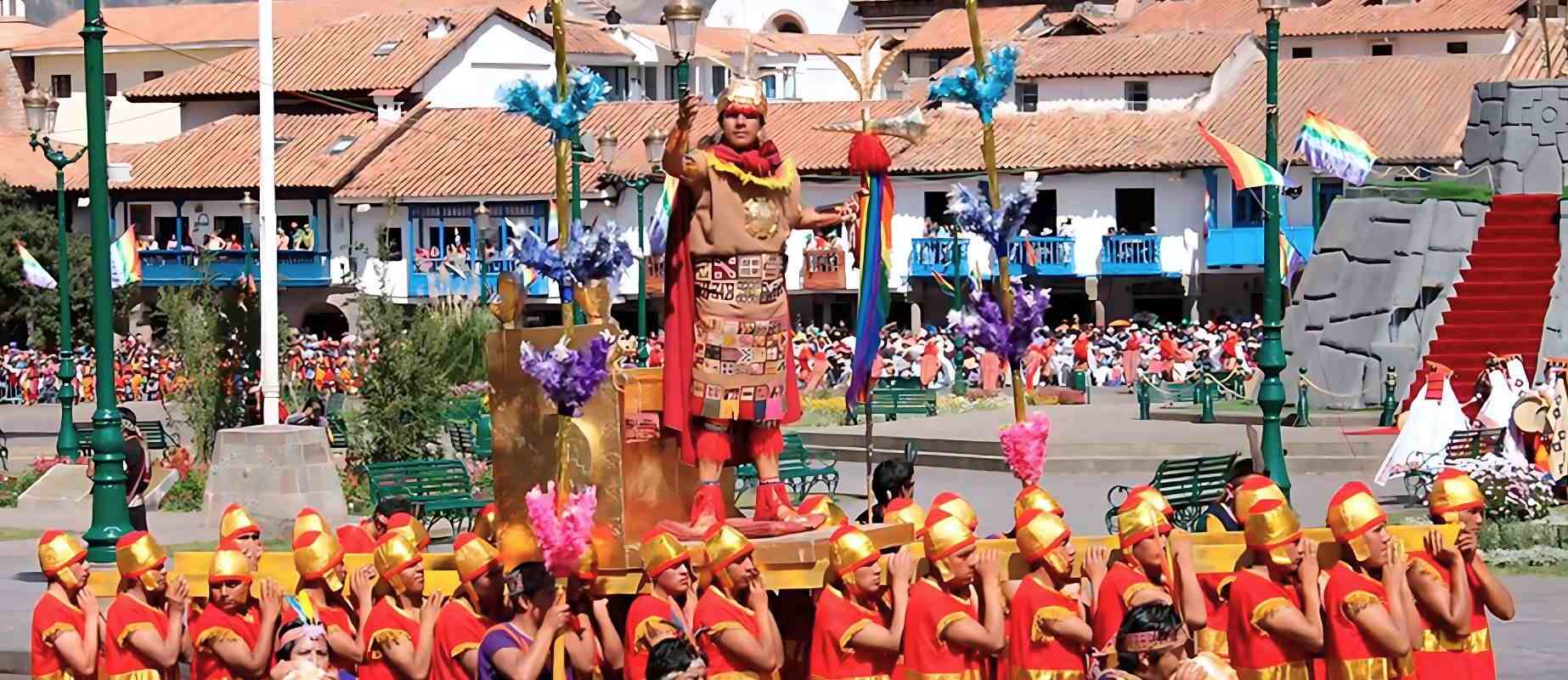
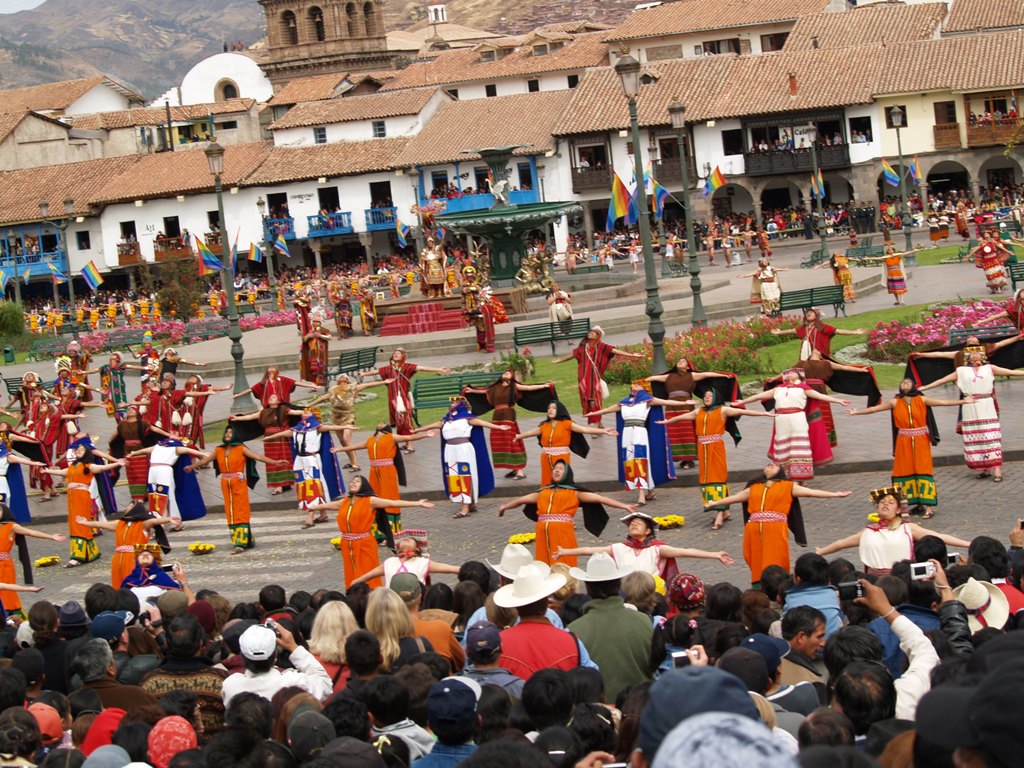
On June 24, Cusco celebrates Inti Raymi, the Inca festival of the sun, marking the winter solstice. The ceremony starts at Qorikancha, continues in the Plaza de Armas and ends at Sacsayhuamán, with hundreds of performers recreating the ritual in Quechua.
Seating options at Sacsayhuamán
Seats in the grandstands at Sacsayhuamán are sold in advance and are expensive, but they guarantee a clear view. You can also watch from the surrounding hills for free, although you need to arrive very early and expect large crowds. The stages at Qorikancha and the Plaza de Armas are free to watch from the street.
San Juan in the Amazon
In the Amazon, June 24 is the feast of Saint John, celebrated with river baths, music and juanes, rice parcels with chicken wrapped in bijao leaves.
July and August: Patron Saints and National Holidays
Virgen del Carmen in Paucartambo
Around July 15 to 18, the small town of Paucartambo, several hours from Cusco, hosts one of the most colorful festivals in Peru. Dance groups in masks perform battles and stories for days in honor of the Virgin of Carmen. Accommodation is very limited, so most visitors go with an organized trip.
Fiestas Patrias
July 28 and 29 mark Peru’s Independence Day, with military parades, flags on every building and many Peruvians traveling within the country. Expect higher prices and full buses during this long weekend.
Offerings to Pachamama
On August 1, many Andean families make offerings to Pachamama, burying food, coca leaves and chicha as thanks to the Earth. Some hotels and communities invite visitors to take part in a ceremony.
September and October: Lima’s Purple Month
Señor de los Milagros
In October, Lima turns purple for the Lord of Miracles, a colonial image of Christ painted by an enslaved Angolan man in the 17th century. Processions carrying the heavy image last many hours and gather huge crowds. The celebration also brings turrón de Doña Pepa, a sweet layered dessert sold everywhere during the month.
November and December: Remembering the Dead and Christmas Markets
Día de Todos los Santos
On November 1 and 2, families visit cemeteries with food, music and flowers to remember their loved ones. In the Andes, bakeries sell tantawawas, sweet breads shaped like babies and decorated with painted faces.
Puno Week
In early November, Puno celebrates its foundation and the legend of Manco Cápac and Mama Ocllo, who rose from Lake Titicaca to found the Inca Empire. The festivities include a reenactment on the lake and parades.
Santurantikuy in Cusco
On December 24, the Plaza de Armas in Cusco turns into a large market of Christmas figures, handmade crafts and nativity scenes. Artisans from across the region sell figures of the Child Jesus, animals and traditional characters, and families come to buy decorations for their homes.
Planning Your Trip Around a Festival
Book accommodation as early as possible, since prices in Cusco, Puno and Paucartambo can double during major celebrations. Dates for Carnival, Holy Week, Corpus Christi and Qoyllur Rit’i change every year because they depend on the date of Easter, so confirm them before booking. Expect road closures, crowds and slower service, and leave margin in your schedule.
Festival Etiquette for Visitors
Ask before photographing dancers or families up close, especially during religious moments. Do not interrupt processions or walk between dancers and the image being carried. Alcohol is common in many celebrations, but pace yourself, particularly at altitude. Dress modestly for religious events and follow the instructions of local organizers.
Combining Festivals in Peru and Bolivia
Bolivia shares many traditions with southern Peru. The Carnival of Oruro, also recognized by UNESCO, takes place in February or March, and La Paz celebrates the Gran Poder festival between May and June. If you plan to cross the border around those dates, our Peru and Bolivia tour connects Cusco, Lake Titicaca and Bolivia in one route.
Frequently Asked Questions
What is the most famous festival in Peru?
Inti Raymi in Cusco is the best known internationally, while the Candelaria in Puno is the largest in number of dancers.
Do I need tickets to watch Inti Raymi?
Only for the grandstand seats at Sacsayhuamán. The ceremonies at Qorikancha and in the Plaza de Armas are free.
Are festivals safe for tourists?
Generally yes, but crowds attract pickpockets. Carry only what you need and stay with your group.
Can tourists join the dances?
Dance groups are organized months in advance, so visitors usually watch. In some communities, locals invite visitors to join informal dances at the end of the day.
Do shops and museums close during festivals?
Some close on the main days, especially public offices and banks during national holidays. Check opening hours in advance.
Which festivals are best for families with children?
Santurantikuy, Fiestas Patrias parades and the Corpus Christi processions are easy to enjoy with children. Qoyllur Rit’i and Paucartambo are more demanding.