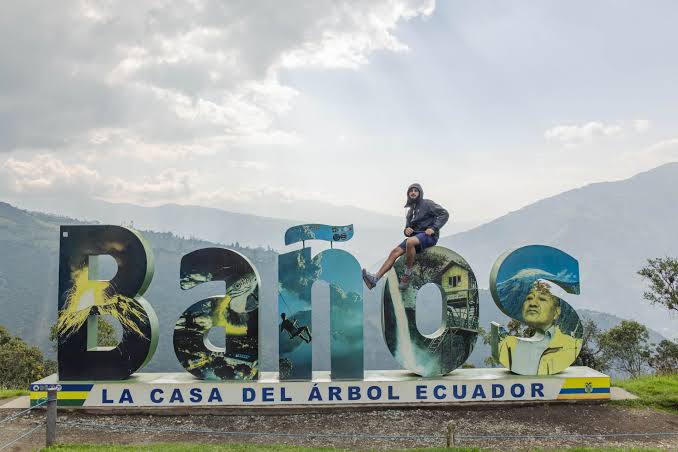
Baños is where Ecuador’s mountains start dropping toward the Amazon, and that position gives it a landscape full of waterfalls, deep canyons and thermal springs. Set at the foot of an active volcano, the town has become Ecuador’s adventure capital, with rafting, canyoning and cycling on offer every day. It is also a relaxing place to soak in hot pools and enjoy a slower pace. This guide covers what to do in Baños and how to fit it into your route.
A Town Between the Andes and the Amazon
Baños de Agua Santa, its full name, sits at about 1,820 m a.s.l. in the province of Tungurahua. It lies in a narrow valley carved by the Pastaza River, which flows east toward the Amazon basin. The lower altitude compared to Quito means warmer temperatures and lush vegetation, and the town is small enough to explore on foot.
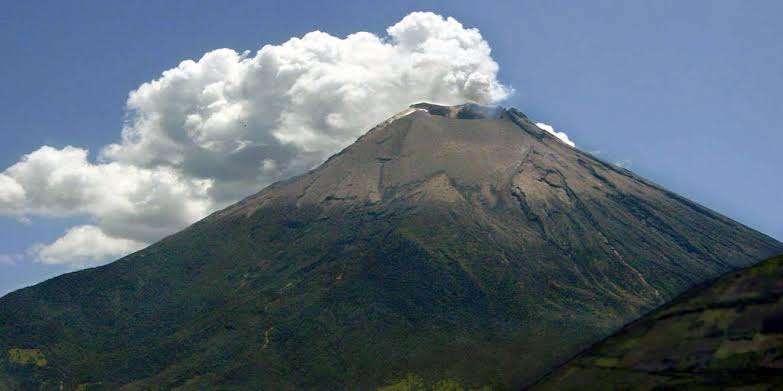
Living Beside Tungurahua Volcano
Tungurahua, at around 5,020 m a.s.l., rises right above the town. Its name means “throat of fire” in Quechua, and it has been one of Ecuador’s most active volcanoes in recent decades.
Eruptions and evacuation routes
A major eruption in 1999 led to the temporary evacuation of Baños, and the volcano remained active for years afterward. Today, the town has marked evacuation routes and a monitoring system. Pay attention to the signs around town and follow any instructions from local authorities during your stay.
Hot Springs Fed by the Volcano
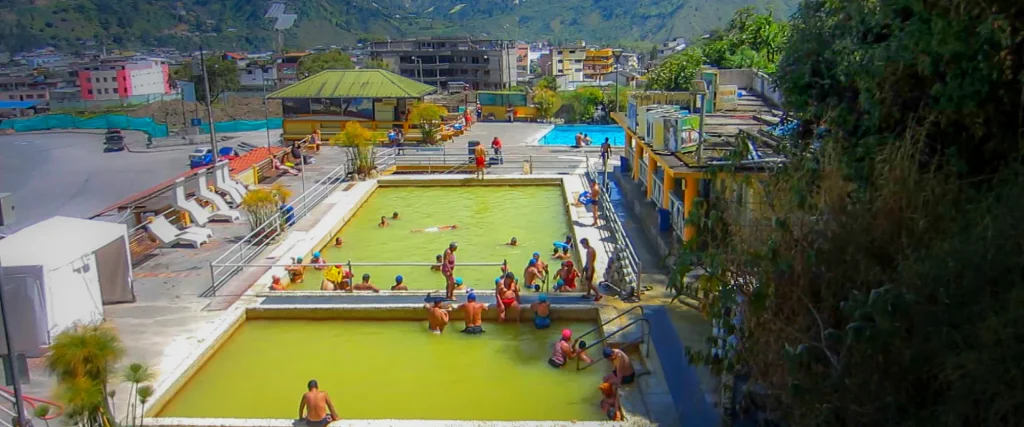
Piscinas de la Virgen
The most popular pools sit at the base of a waterfall at the edge of the center. Their mineral-rich water varies in temperature from cold to very hot. Locals often come early in the morning or late at night, when the pools are less crowded and the air is cool.
El Salado and spas
El Salado, a short ride from the center, offers several pools of different temperatures in a greener setting. Baños also has many spas offering massages, steam baths and treatments, which are a perfect way to recover after a day of activities.
The Waterfall Route by Bike
The Ruta de las Cascadas follows the road from Baños toward Puyo, descending along the Pastaza canyon past a series of waterfalls. Renting a bike and riding downhill is the classic way to see it, with short stops at viewpoints along the way. The road passes through several tunnels, but bikes can use side paths for most of them.
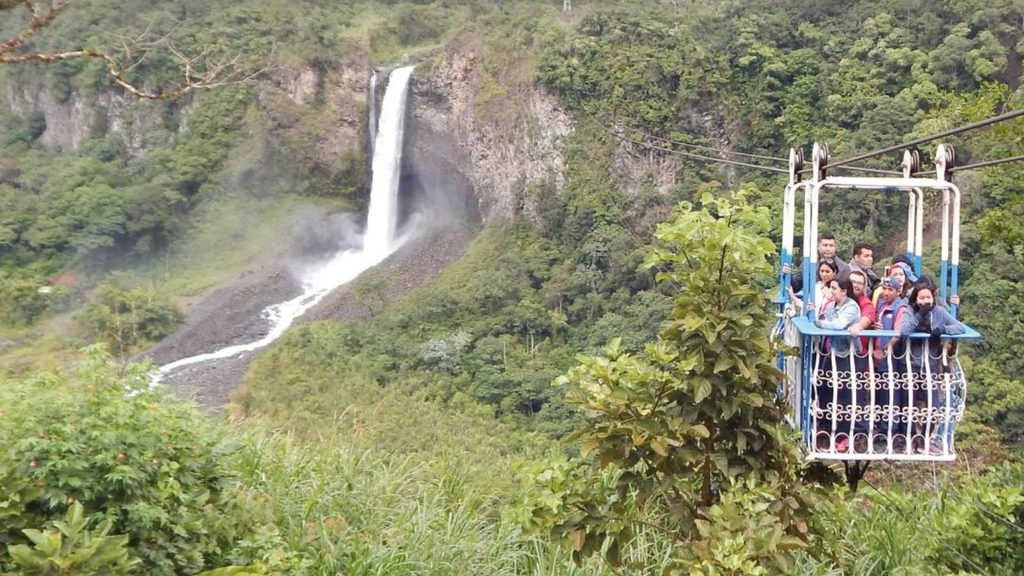
Manto de la Novia and the tarabita
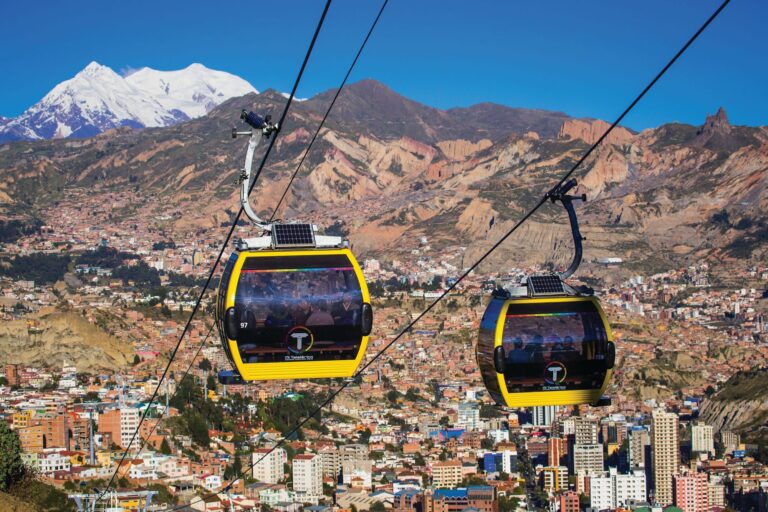
The Manto de la Novia, or Bride’s Veil, is a tall, thin waterfall falling into the canyon. You can cross the gorge in a tarabita, an open cable car, for a close view of the falls and the river below.
Pailón del Diablo
The Devil’s Cauldron is the most powerful waterfall on the route. A trail and suspension bridges lead to viewpoints where you feel the spray, and a narrow passage lets you climb behind the falling water. Bring a rain jacket, as you will get wet.
Getting back to town
After Pailón del Diablo, most cyclists stop in the village of Río Verde. From there, pickup trucks and buses carry riders and bikes back to Baños for a small fee, so you do not have to ride uphill.
Adrenaline Activities on the Rivers and Canyons
Rafting on the Pastaza River offers challenging rapids for experienced paddlers, while the Patate River is calmer and suitable for beginners. Canyoning involves rappelling down waterfalls with ropes and helmets. Other options include ziplines across the canyon, bridge jumping and paragliding when the weather allows. Choose operators with certified guides and good equipment, and check that insurance is included.
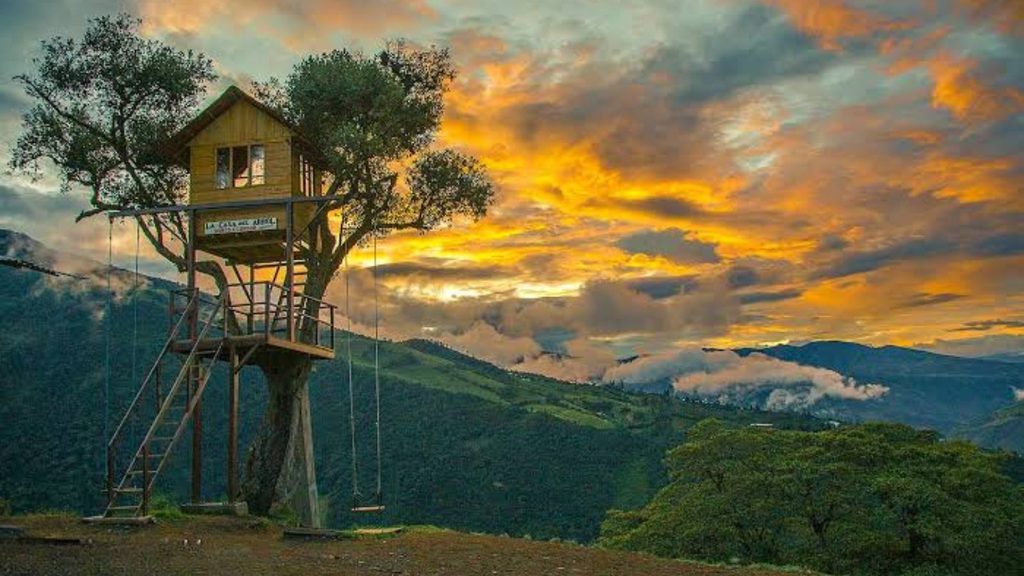
Casa del Árbol and the Swing at the Edge of the World
High above the town, the Casa del Árbol is a treehouse with a swing that seems to fly over the valley. On clear mornings, Tungurahua appears in the background, making it one of the most photographed spots in Ecuador. The road up is steep, so most visitors take a bus or taxi and walk back down.
The Basilica and the Legend of Agua Santa
The Basilica of Our Lady of the Holy Water, in the center of town, is dedicated to the Virgin believed to protect Baños from eruptions and disasters. Inside, paintings show miracles attributed to her, and many pilgrims visit, especially in October during her main celebration.
Melcocha and Other Sweet Traditions
Walking through Baños, you will see people pulling long strands of golden taffy over wooden hooks at shop entrances. This is melcocha, a chewy candy made from sugarcane. Sugarcane juice is also sold fresh on many corners, and cuy and grilled trout appear on local menus.

Rain, Cloud and Clear Mornings
Baños has a mild subtropical climate, with daytime temperatures usually around 18 to 22°C. Rain can fall in any month because moist air rises from the Amazon, and it often arrives in the afternoon. Mornings tend to be clearer, so plan viewpoints and the volcano views early in the day.
Getting to Baños from Quito
Buses from Quito take about three and a half hours, often passing through Ambato. The route connects well with the Avenue of the Volcanoes, including Cotopaxi and the Quilotoa lagoon, which many travelers visit on the way south.
From Baños to the Amazon
Baños is the gateway to the Ecuadorian rainforest. The road continues past the waterfalls to Puyo, about an hour and a half away, where the jungle begins. From there you can reach lodges, indigenous communities and rivers deeper in the forest. Plan that next step with our guide to the Ecuadorian Amazon.
Where Baños Fits in a South America Trip
Two or three days in Baños give you time for the waterfall route, a river activity and a relaxed afternoon in the hot springs. It works best between Quito and Cuenca or before heading into the Amazon. If you want Ecuador combined with other countries in one route, our 12-day South America tour brings several highlights together.
Frequently Asked Questions
How many days should I spend in Baños?
Two to three days are enough for the waterfall route, one adventure activity and time in the hot springs.
Is Baños suitable for travelers who are not into extreme sports?
Yes. The hot springs, waterfalls, viewpoints and spas make it enjoyable without any adrenaline activities.
Is it safe to visit Baños with an active volcano nearby?
Yes. The volcano is monitored constantly, and the town has clear alert systems and evacuation routes.
Can children do the waterfall route?
Older children can ride the route with supervision, and families can also visit the main waterfalls by bus or taxi.
Do I need to book activities in advance?
Usually not. Many agencies in town offer daily departures, although booking a day ahead helps in high season.
Are the hot springs clean?
The water has a brownish color due to its minerals, which is natural. Pools are drained and cleaned regularly.